
Multi-Gigabit is the term used to describe data traveling at least twice the speed of Gigabit, which means, for a large home, you’ll need a system with multiple 2.5Gbps ports and fast Wi-Fi to experience this type of bandwidth.
Confused about multi-Gigabit vs. Multi-Gig? Here’s the crash course on the subject!
This post features the currently best 2.5Gbps Multi-Gig mesh systems for a home a single Wi-Fi router of the same grade doesn’t provide enough coverage. These are sensible options to deliver what you need without going overboard, often the case with 10Gbps Multi-Gig hardware.
2026’s best 2.5Gbps Multi-Gig mesh systems: The list
All the hardware mentioned here has at least two 2.5Gbps Multi-Gig ports. For best performance, use network cables to connect the hardware units—a configuration often referred to as wired backhauling. However, even homes without wiring will offer excellent wireless backhaul thanks to support for Wi-Fi 7’s MLO feature.
I organize these lists in order from good to best. The number before a product’s name indicates its ranking based on my real-world experience, with #1 being the best. When applicable, I also include similar alternatives.
Top 5 best 2.5Gbps Multi-Gig mesh systems
 |  |  |  |  | |
| Name | MSI Roamii BE Pro’s Rating | ASUS ZenWiFi BT8’s Rating | NETGEAR Orbi 770 Series (RBE773)’s Rating | ASUS ZenWiFi BD5’s Rating | TP-Link Deco BE25 (Deco BE5000)’s Rating |
| Price | – | – | – | – | – |
| Rating | |||||
| Description | |||||
| Statistics | |||||
| Buy this product |
5. TP-Link Deco BE25: 2x 2.5GBASE-T
The Deco BE25 has two 2.5Gbps ports, supports Wi-Fi 7, and is therefore best used via wired backhaul. It’s currently one of the most affordable Wi-Fi 7 mesh systems.
Alternatively, consider the TP-Link Deco BE63/65, which supports all three Wi-Fi 7 bands.
TP-Link Deco BE25 (Deco BE5000)'s Rating

Pros
Reliable Wi-Fi performance; dual 2.5Gbps ports with excellent wired backhauling
Super affordable for Wi-Fi 7 hardware; standard set of free networking and features
Compact, eye-catching, fanless design; easy to use
Cons
Short range, minimum Wi-Fi 7 specs with matching performance
Security+ and advanced Parental Controls require subscriptions.
TP-Link login account and mobile app required; no web-based management
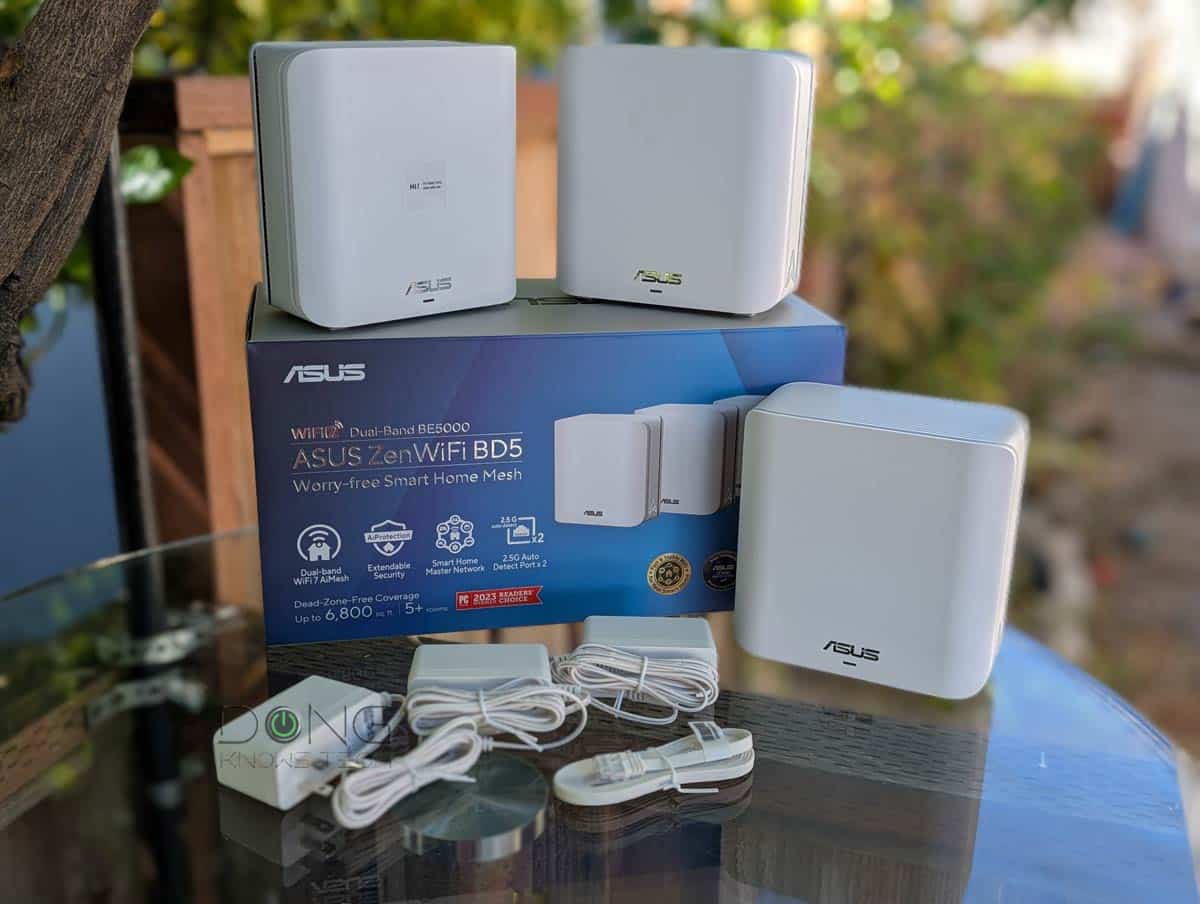
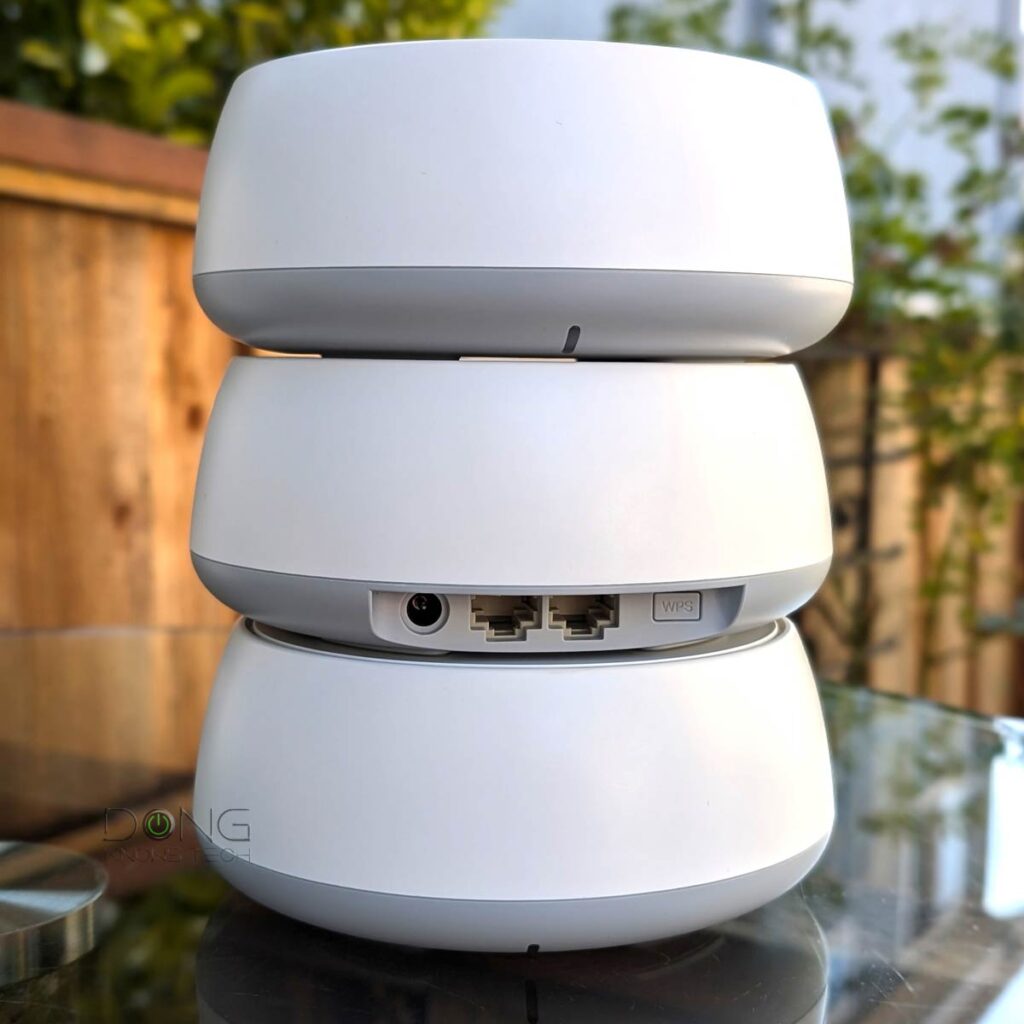
4. ASUS ZenWiFi BD5: 2x 2.5Gbps ports


The ZenWiFi BD5 is available in 2- or 3-pack configurations, though you can also get individual routers to build a system—the hardware units are pre-synced when you buy a pack.
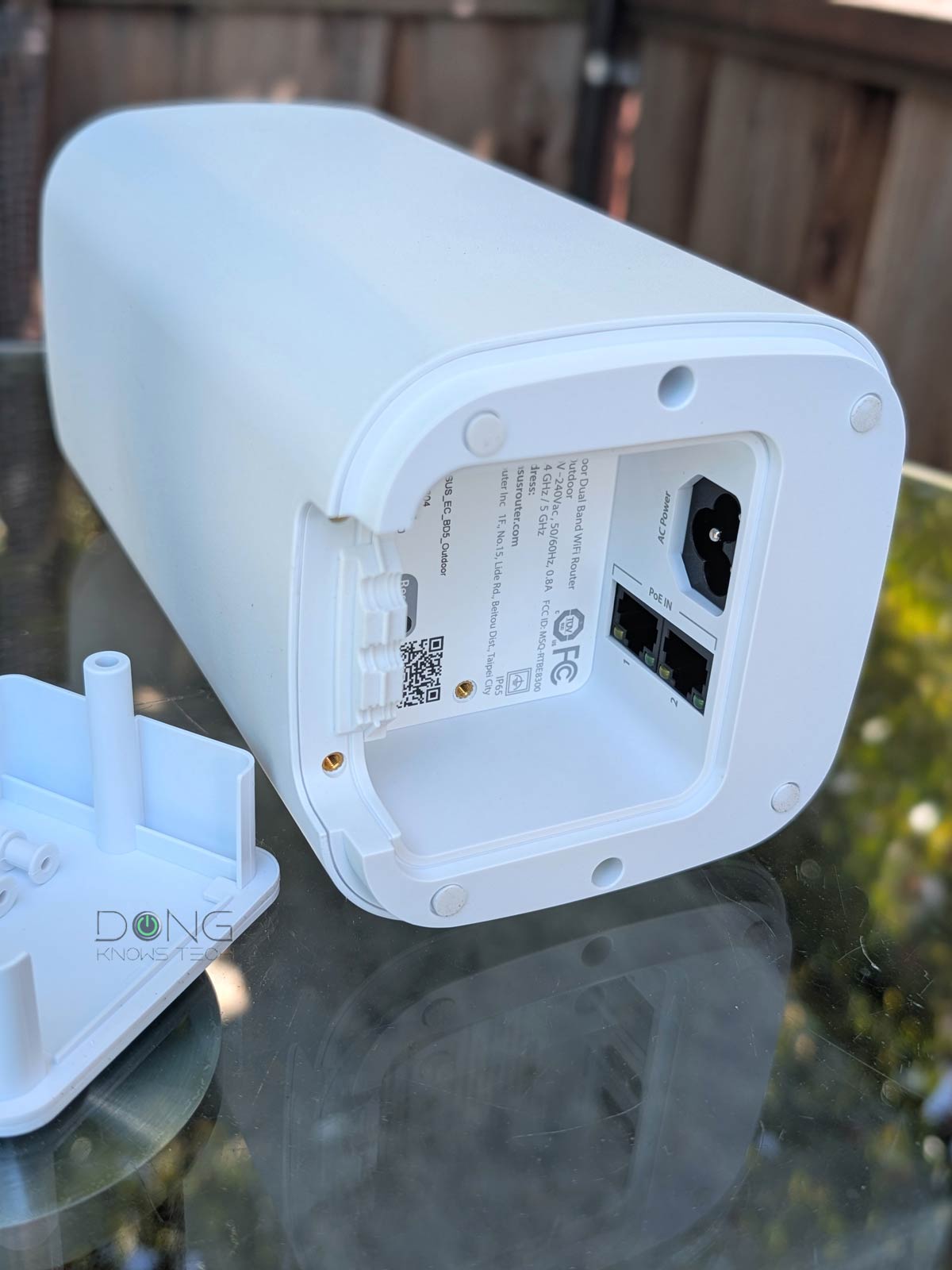
With two auto-sensing 2.5Gbps ports and a PoE Outdoor option, the BD5 is the most flexible dual-band Wi-Fi 7 mesh system to date. It also has strong Gig+ real-world performance in a wireless backhaul setup and actual multi-Gigabit performance in a wired backhaul setup.
ASUS ZenWiFi BD5's Rating
Pros
Dual-band Wi-Fi 7 and two 2.5Gbps ports with reliable Gig+ real-world performance and ample coverage
ASUSWRT 5.0 offers numerous customizations and free-for-life high-end features (VPN, Parental Controls, Online Protection, Smart Home Master, etc.).
Robust web user interface and helpful optional mobile app; easy-to-blend-in design
Compact, fanless design with an outdoor option
Cons
Only two network ports with mid-tier bandwidth specs and no 6GHz band
Can't take setting backup files of other Asus routers
Not wall-mount-ready
3. NETGEAR Orbi 770 series: multiple 2.5Gbps ports

The Orbi 770 series is NETGEAR’s entry-level tri-band Wi-Fi 7 mesh system. It comes with four 2.5Gbps ports on the router units and two 2.5Gbps ports on the satellite unit. Thanks to the MLO support, this set works well both in wired and wireless configurations.
Alternatively, you can consider the Orbi 370 series, a dual-band option.
NETGEAR Orbi 770 Series (RBE773)'s Rating

Pros
Straightforward tri-band without permanent dedicated backhaul; excellent performance for the specs; all Multi-Gig ports
Multi-Gigabit wired backhauling support; fast wireless backhaul link
Aesthetically pleasant design; runs cool and quiet; comparatively low power consumption
Cons
No 10Gbps ports; limited Wi-Fi options; 6GHz band not user-customizable; no AFC
No web-based Remote Management,
Thin on free networking features; advanced features require the Orbi mobile app and subscriptions; no USB port
2. ASUS ZenWiFi BT8: 2x 2.5GBASE-T
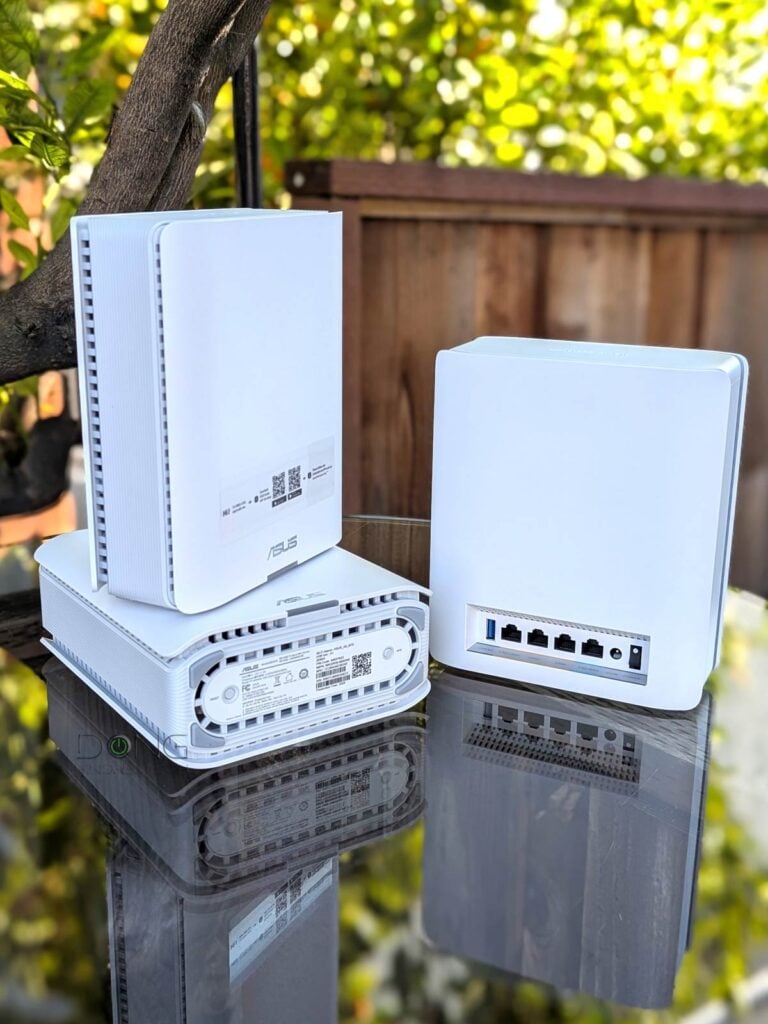
The ZenWiFi BT8 is ASUS’s first Wi-Fi 7 hardware that doesn’t have 10Gbps. Instead, it features two 2.5Gbps ports per router (plus two Gigabit ports). In return, it comes with a friendly price tag, making it an excellent deal for those living in a large home.
ASUS ZenWiFi BT8's Rating

Pros
Tri-band Wi-Fi 7; two 2.5Gbps ports per unit; excellent overall performance
ASUSWRT 5.0 has lots of customizations and free-for-life high-end features (VPN, Parental Controls, Online Protection, Dual-WAN, Link Aggregation, Smart Home Master, etc.).
Robust web user interface and helpful optional mobile app; easy-to-blend-in design
Comparatively compact with no internal fan; runs cool and quiet
Cons
Only three network ports; entry-level Multi-Gig grade; terrible NAS performance when hosting an external USB drive
Not wall-mount-ready; slightly buggy interface and MLO
1. MSI Roamii BE Pro: 4x 2.5GBASE-T
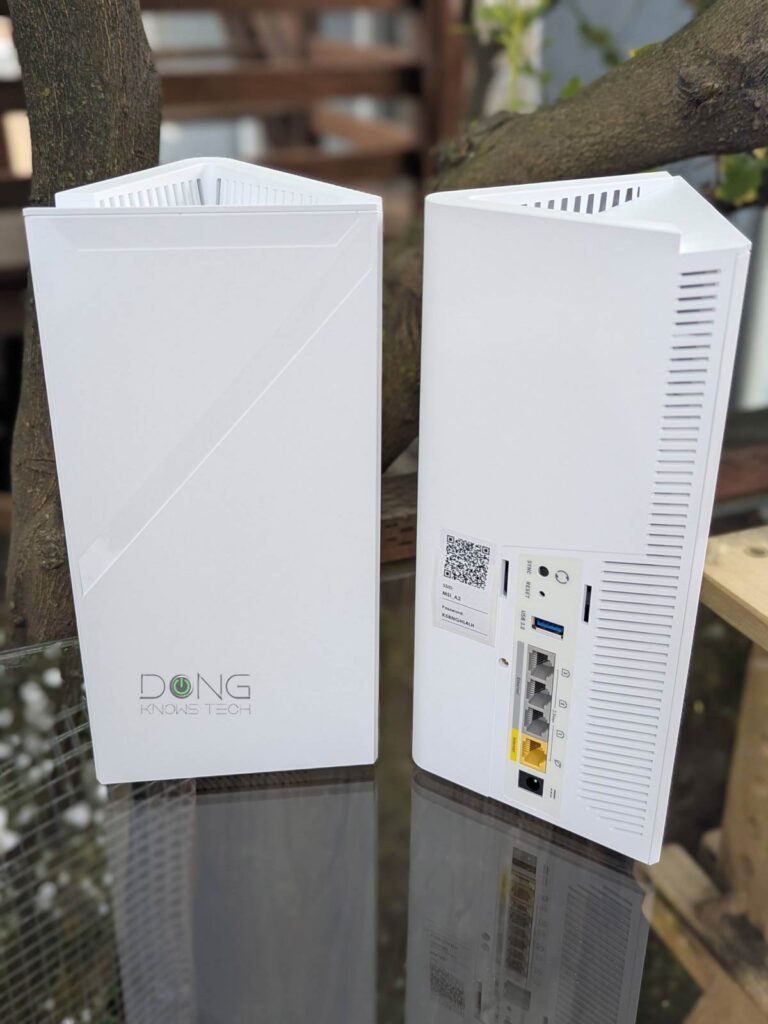
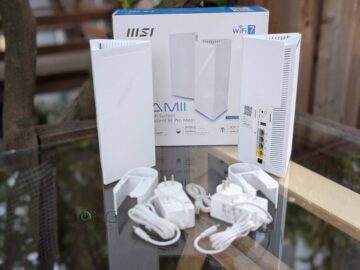
The Roamii BE Pro is MSI’s 2026 tri-band mesh system. It’s currently the least expensive tri-band Wi-Fi 7 mesh option on the market. With four 2.5Gbps ports, plenty of free features, and excellent performance, it’s a great deal for a large home with or without network wiring.
MSI Roamii BE Pro's Rating
Pros
Affordable with excellent entry-level Multi-Gigabit performance via mid-tier Wi-Fi specs and four 2.5Gbps ports
Non-intrusive hardware with standard feature set, free online protection, robust local web-based UI, and ample USB-based features
Aesthetically pleasing, fanless design, runs cool, wall-mount accessories included
Helpful MSI Router 2.0 mobile app, no privacy risk, no add-on premium
Cons
No 10Gbps ports or AFC, NAS performance when hosting USB drive could be better
Hardware units are not pre-synced, no single router or 3-pack options (for now)
The final thoughts
There you go. Any of the mesh systems above will work well for those with up to 2Gbps broadband. The rule is to use them via wired backhauling, but if you have to go wireless, pick the tri-band options. A dual-band Wi-Fi 7 system, in a mesh (fully wireless) configuration, can only deliver sub-Gigabit bandwidth (500Mbps) at best.


Comments are subject to approval, redaction, or removal. You're in the no-nonsense zone and that applies BOTH ways.
It's generally faster to get answers via site/page search. Your question/comment is one of many Dong Knows Tech receives daily.
Thank you!
(•) If you have subscription-related issues or represent a company/product mentioned here, please use the contact page or a PR channel.