
If you look at ASUS’s current mobile router, the RT-AX57 Go, and think, “Meh!” just because it lacks Wi-Fi 7, a SIM slot, or a Multi-Gig port, you’re in for a pleasant surprise.
Today, ASUS announced two brand-new travel routers with all of those features: the RT-BE58 Go and the 5G Go. Actually, one more was also unveiled at the same time: the RT-AX50 Go. However, it is a much lower version of the RT-AX57 Go, so we can skip it.
Let’s see what the new ASUS RT-BE58 Go and 5G Go entail.
Update: The review of the RT-BE58 Go is available here.
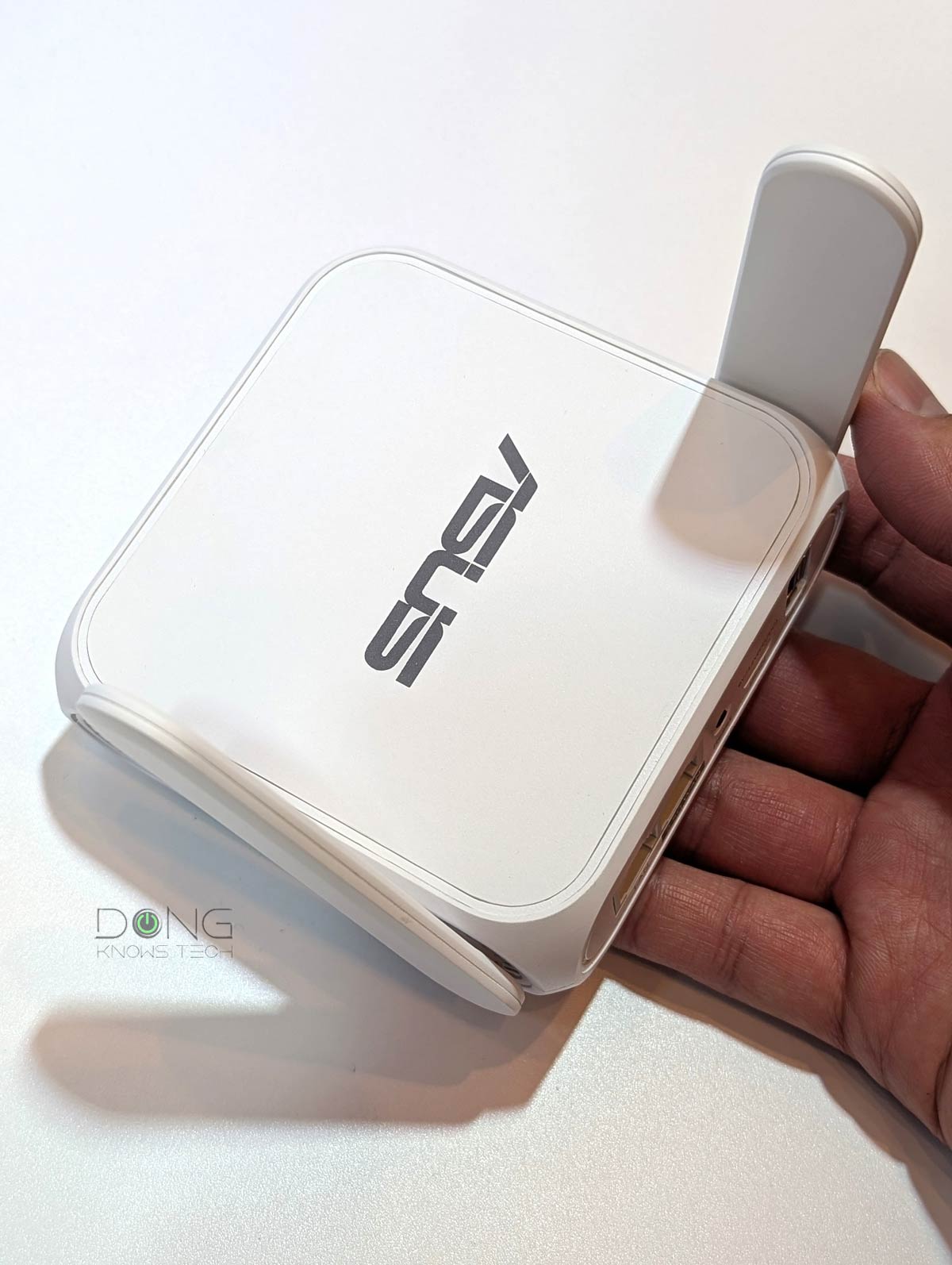
ASUS RT-BE58 Go: More than the Wi-Fi 7 version of the RT-AX57 Go
The RT-BE58 Go looks different from the older RT-AX57 Go cousin. (Interestingly, it shares the same design as the presumably rival that was also announced at CES 2025, the TP-Link TL-WR3602BE.)
The new travel router now has a smaller design and two external antennas. It also has a 2.5Gbps port (plus a Gigabit port) and features dual-band BE3600 Wi-Fi 7, the same Wi-Fi specs as the ZenWiFi BD4.
The table below shows its hardware specs vs. those of the older model.
Hardware specifications: ASUS RT-BE58 Go vs. RT-AX57 Go
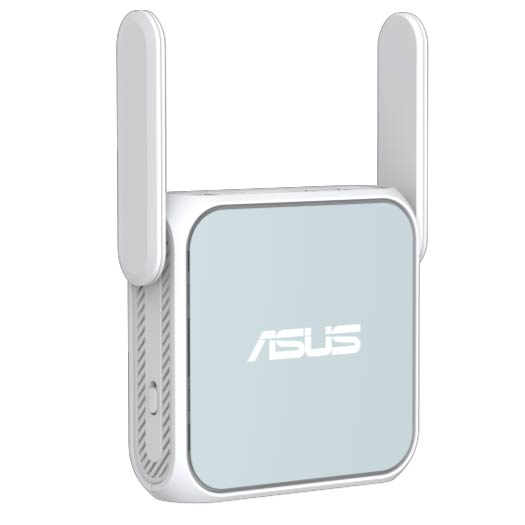 |  | |
|---|---|---|
| Full Name | ASUS RT-BE58 Go BE3600 Dual-Band WiFi 7 Travel Router | ASUS RT-AX57 Go AX3000 Dual-Band WiFi 6 Travel Router |
| Model | RT-BE58 Go | RT-AX57 Go |
| Dimensions | 98mm x 94mm x 31mm | 120 x 120x 21.5 mm |
| Weight | TBD | 7.1 oz (200 g) |
| Processing Power | Quad-core 2.0GHz, 256MB Flash, 2GB RAM | Dual-core 1.3GHz SoC, 256 MB Flash, 512 MB RAM |
| Wi-Fi Technology | Dual-Band BE3600 | Dual-band AX3000 |
| 1st Band (2.4GHz) | 2×2 BE: Up to 688Mbps (20/40MHz) | 2×2 AX: Up to 600Mbps (20/40 MHz) |
| 2nd Band (5GHz) | 2×2 BE: Up to 2882Mbps (20/40/80/160MHz) | 2×2 Wi-Fi 6: Up to 2.4 Gbps (20/40/80/160MHz) |
| Wireless Security | WPA, WPA2, WPA3 | |
| Built-in Cellular Modem | None | |
| Mobile App | Asus Router | |
| Web User Interface | Yes (open-source AsusWRT) | |
| Networking Features | All ASUS Routers’ Core Features, for example: Advanced VPN (WireGuard and OpenVPN server or client supported) AiProtection Parental Control QoS AiMesh | |
| Operating Roles | Mobile hotspot (via a tethered cellular mode/phone) Wi-Fi (AiMesh) router/(AiMesh node) Wi-Fi repeater (WISP mode), Wi-Fi bridge, Wi-Fi access point | |
| Firmware Version (at review) | not yet tested | 3.0.0.6.102_22188 |
| USB Port | 1x USB-C (power) 1x USB 3.0 (all USB-related features) | |
| Gigabit Port | 1x WAN/LAN | 2x LAN/WAN |
| Multi-Gig Port | 1x 2.5Gbps WAN/LAN | None |
| Dual-WAN | Yes (WAN+LAN/USB) | |
| Link Aggregation | No | |
| Power Consumption (per 24 hours) | TBD | ≈ 130 Wh |
| US Launch Price (check street price!) | 159.99 | $129.99 |


Overall, the RT-BE58 Go is the previous model, the RT-AX57 Go, plus the support for dual-band Wi-Fi 7 and a 2.5Gbps port. Both of those are significant in terms of what it has to offer in terms of speeds.
Other than that, it’s a very familiar router compared to the rest of ASUS’s RT series. You can use it as a travel router or, if you live in a small home, as the primary router for your traditional broadband.
ASUS 5G Go: The ultimate travel router
The 5G Go is first and foremost a 5G router with a built-in cellular modem. You can just pop in a nano SIM card, and you’re ready to go.
On this front, ASUS says that the new tiny router features 5GNR Sub6 and 4G LTE Cat.20 with cellular data rates up to almost 6Gbps.
Most impressively, on the Wi-FI front, the 5G GO features a tri-band Wi-Fi 7 with up to 2882Mbps on the 5GHz band and up to 5760Mbps on the 6GHz band. It’s unclear if it’s a natural tri-band router or if users can only use either the 5GHz or the 6GHz at a time, like in the case of the NETGEAR M6 Pro.
Additionally, with a 2.5Gbps network port, it can host a traditional network, like the RT-AX57 Go. Sharing a similar firmware, the new router can also offer advanced networking features, including a comprehensive VPN feature set. The new mobile router also supports open-source OpenWRT firmware.
All that is housed in a compact IP51-rated design for protection against the elements. The router also comes with a 6030mAh battery to provide “all-day” battery life for those working remotely or on the go.
5G-GO’s hardware specifications
| Model name | 5G-GO |
| Cellular Data rate | 5GNR Sub6 5.95Gbps; LTE Cat.20 : 2.0Gbps2/4G/5G/6G |
| Operating frequency | 4G LTE:B1/B2/B3/B4/B5/B7/B8/B12/B13/B14/B20/B28/B30/B38/B40/B41/B46/B48/B662. 5G Sub6:n1/n2/n3/n5/n7/n8/n12/n14/n20/n25/n28/n30/n38/n40/n41/n66/n71/n77/n783. 2G, 5G, 6G (320MHz), 2G+5G (160MHz), 2G+6G (160MHz) |
| Wi-Fi specs | Wi-Fi: 688/2880/5760 Mbps |
| Modem Standard | 4G/5G NR 3GPP Release 17 |
| Antennas | 8 LDS Antenna (6 for 5G/4G; 2 for WLAN) Duo Ext. TS9 Connectors |
| Memory | Flash 8GB, DDR4 RAM 1GB |
| Ruggedness | IP51 |
| I/O Ports | 1x 2.5G port (WAN/LAN) 1x 3.2 Gen 2 Type-C (10Gbps tethering, QC/PD charging) 2.4” LCD TSP4FF/Nano SIM slot |
| Buttons | Reset, Power |
| AC Adapter | 20W QC Adapter |
| Dimension | 115 x 110 x 22.7mm |
| Weight | 300g |
Availability and pricing
ASUS says the RT-BE58 Go and 5G Go will be available later this year, and their pricing will be announced then. Check back for more.


GL.iNet came up with this design in November 2021 with their Opal release and has followed on with their Slate and Beryl travel routers. They might have had an older design with this physical form factors and visual design layout. In other words, ASUS copied the entire physical router visual design and layout down to the status light on the front of the device and connections on the back of the router save the reset button. Look at the press release about the Opal from November 29, 2021. Compare the photos of it versus the Asus. Now, try to tell me that Asus came up with this design and its layout in January 2025 BEFORE GL.iNet did in November 2021. Last I checked, 2021 comes before 2025.
I didn’t say anything about who designed it nor did I care. My question is are you sure? If so, show me the proof. Just because something came out first, in your perspective, doesn’t mean it was the original.
My post back in November points out that you implied this was a completely new design by Asus that was something new in the industry. No, GL.iNet came up with the design, and the layout well before Asus. THAT is my point. You don’t seem to get the fact that Asus took someone else’s design layout and copied it. That was because GL.iNet’s design is so good.
To be honest, I stopped visiting your site until I got curious about something I read in another place. I went back to see what you had written about my original comment and it showed that you thought the design release back in January 2025 was when it first came out a year before GL.iNet did.
Yes, there is a very distinct issue here – you are taking Asus as the first in industry to do this travel router design when the facts say something different.
Read those comments again, Steve. I only said that ASUS had been in the networking business for much longer than GL.iNeT and this one was a Wi-Fi 7 router that was first announced during this time.
Another point is that are you sure ASUS copied from GL.iNet? Just because the latter might’ve actually had a product of the design before the former doesn’t mean it’s the original designer. TP-Link and others use similar designs, too. That happens a lot.
You seem hung up on GL.iNet. If you really want to know the fact, contact the companies to have official statements.
Until you’ve done your homework, please stop trolling. Thanks.
I was going to buy RT-AX57 Go but I changed my mind after seeing your news. When will RT-BE58 Go be released? I couldn’t find anything about it.
Supposedly later this year, Bahadir. I only know what Asus told me at the time.
It will be released very late. I will use it for travelling. Do you think it is worth buying the old one from every angle, especially for shooting?
If you only use it to access the Internet while traveling, or two connect just a couple of devices together, the old one will work fine, Bahadir.
Dong,
I like the possibilities for this as a mobile connection point. It would serve me well if that is the case. Thanks for sharing it! Looking forward to more information on it!
👍
And why does the ASUS 5G Go lack a 79 band
What is 79 band?
Sub6:n1/n2/n3/n5/n7/n8/n12/n14/n20/n25/n28/n30/n38/n40/n41/n66/n71/n77/n783.
n78 and n79 where?
Got it. Those are the specs provided by Asus. So, I have no answer.
Hello Dong,
I was planning to buy the upcoming TPLINK 8550 mobile router, until I saw this announcement of the ASUS 5G Go.
Any idea if the new ASUS 5G Go allows users to read SMS messages from its 2.4-inch screen? And is the display a touchscreen panel?
Thanks.
That’s a good question, Vin. I’ll find out.
thank you Dong.
any word from ASUS regarding reading SMS messages with the ASUS 5G-GO router?
They don’t have answer for that yet, Vin. I think we’ll have to wait until the router is closer to the release date. They didn’t even have one to show at CES.