
When it comes to portable SSDs, Samsung has been one of the biggest names, especially since Micron retired its Crucial consumer brand. However, up to now, the company has offered mostly USB 3.2 drives ranging from Gen 1 to Gen 2×2, with the latest being the T9.
That’s about to change.
Samsung today showcased its first USB4 drives in its all-new P series, which includes the Portable SSD P7 and Portable SSD P9, which, among other things, deliver a significant performance boost.
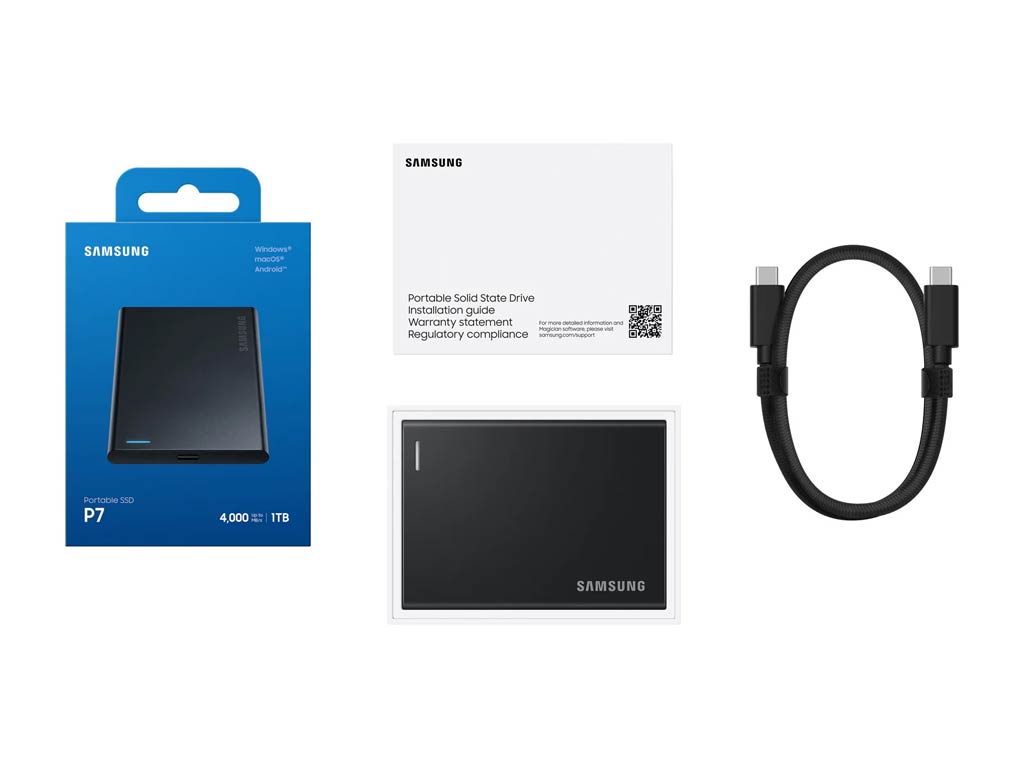
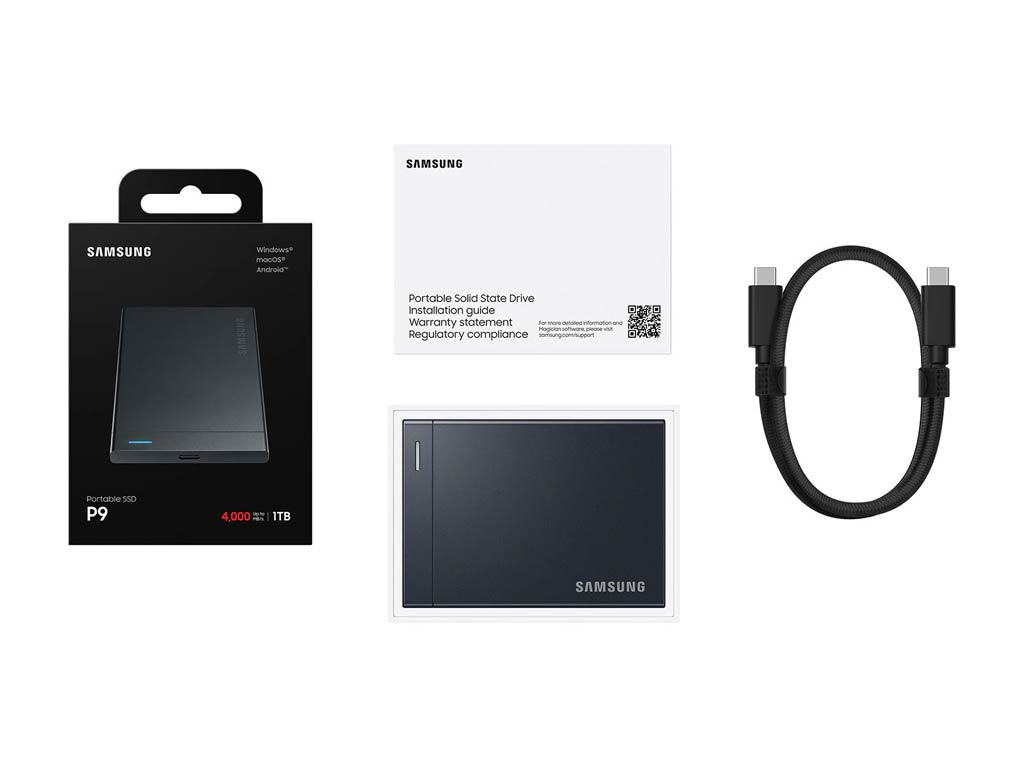
Samsung Portable SSD P7 and P9: Rugged mobile drives with top performance
The two new portable SSDs are almost identical.
Specifically, they have capacities (ranging from 1TB to 8TB) and the USB4 40Gbps standard, with speeds up to 4000 MB/s for writing and 3800 MB/s for reading.
Secondly, both drives come in a “sleek, angular metal body that features a clean, minimalist aesthetic with a modern, forward-looking design”, similar to that of the T9, and can handle dust and drops from up to 2 meters (6.5 feet). On one side, the chassis has a USB-C port for both power and data connectivity. On top, there’s a tiny status LED.
Finally, both come with hardware encryption and a five-year warranty, and are compatible with all existing platforms, including Windows, iOS, Android, macOS, and gaming consoles. For management, the two use the popular Samsung Magician dashboard software.
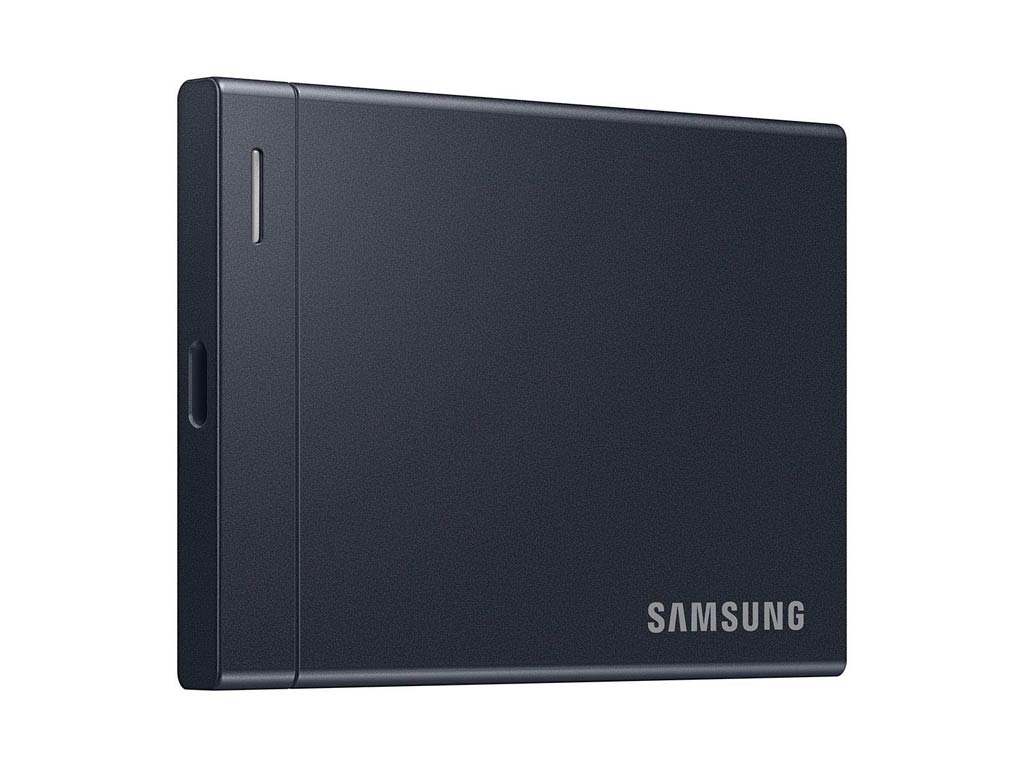
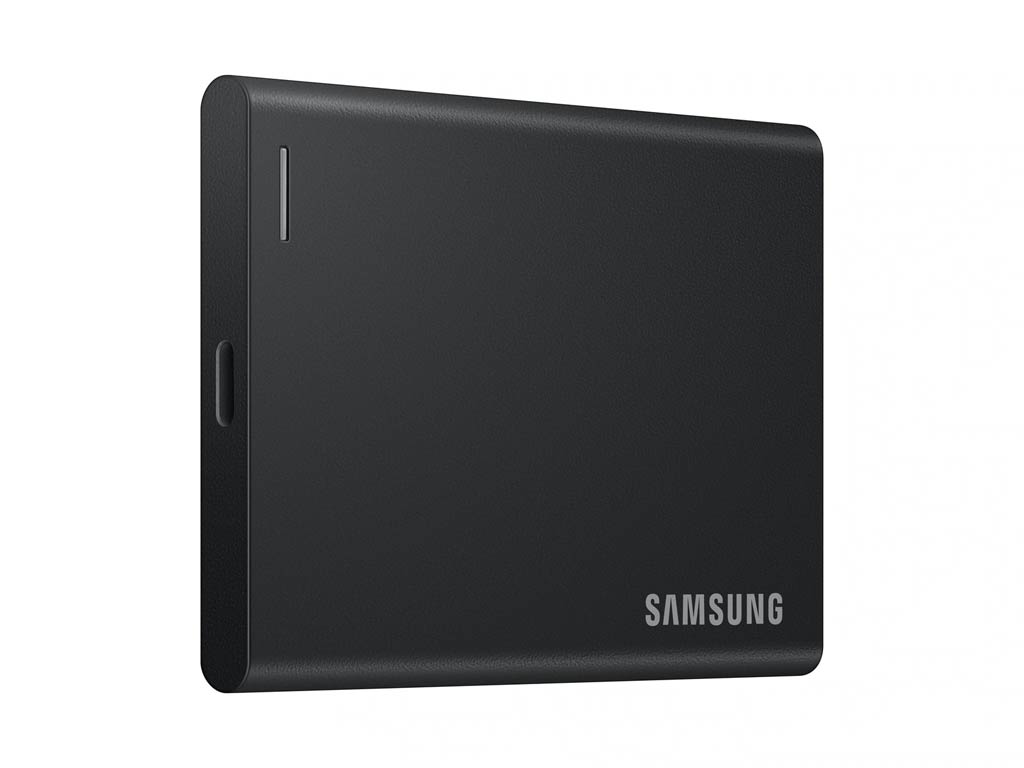
But they do have some minor differences.
Physically, the Portable SSD P9 has a line along the top that separates its LED from the main body, as shown in the photo below. This drive is also geared toward professional users, with likely better sustained performance during heavy loads, such as storing real-time raw video footage directly from the recorder.
The Portable P7, on the other hand, is designed for general consumers’ daily use. It’s a fast backup drive to bring your entire library on the go. For this reason, it’s also less expensive.
On this front, Samsung says both drives are “designed to meet rapidly growing storage demands driven by ultra-high-resolution video, AI content, and large-scale games,” but the flagship P9 “delivers high-end performance for professional users, and the P7 is designed for fast and convenient storage across everyday use cases.”
Samsung Portable SSD P9 vs. P7: Hardware specifciations
| | |
| Full Name | Samsung Portable SSD P9 | Samsung Portable SSD P7 |
| Target Audience | Professional users with heavy, intensive workloads | General consumer with daily tasks |
| Capacity | 1TB, 2TB, 4TB, 8TB | |
| Interface | USB4 40Gbps Backward compatible with USB 3.2 Gen 2×2 (20Gbps) through USB 2.0 | |
| Dimensions | 3.54 x 2.56 x 0.33 in (8.99 x 6.50 x 0.84 cm) | |
| Weight | 3.39 oz (96g) | 3.46 oz (98g) |
| Write Speed | Up to 4,000 | |
| Read Speed | 2TB, 4TB, 8TB: Up to 3,800 MB/s 1TB: 3,700 MB/s | |
| Encryption | AES 256-bit hardware data encryption | |
| Software | Samsung Magician Software | None |
| Supported Platform | Windows, Mac, iOS, Android, Game Consoles | |
| RoHS Compliance | Yes | |
| Ruggedness | Drop-proof (from up to 6.5 feet) | |
| Colors | Black | |
| Included Cables | USB-C cable | |
| US MSRP (at launch) | $339.99 (1TB) $649.99 (2TB) $1,349.99 (4TB) $2,699.99 (8TB) | $289.99 (1TB) $549.99 (2TB) $1,149.99 (4TB) $2,289.99 (8TB) |
| Warranty | 5 years | |
Availability and pricing
Samsung says the Portable SSD P9 and P7 are available for purchase at the end of this month.
The P9 carries the suggested retail price of $339.99 (1TB), $649.99 (2TB), $1,349.99 (4TB), and $2,699.99 (8TB). The P7 is a little more affordable, with prices of $289.99 (1TB), $549.99 (2TB), $1,149.99 (4TB), and $2,289.99 (8TB).


Comments are subject to approval, redaction, or removal. You're in the no-nonsense zone and that applies BOTH ways.
It's generally faster to get answers via site/page search. Your question/comment is one of many Dong Knows Tech receives daily.
Thank you!
(•) If you have subscription-related issues or represent a company/product mentioned here, please use the contact page or a PR channel.