
If you’ve been holding off on getting a Wi-Fi 7 router because Wi-Fi 8 is on the horizon, the wait is almost over.
ASUS today announced its first round of Wi-Fi 8 hardware, featuring not one, not two, but three options: two standalone routers and one ZenWiFi mesh system. In more ways than one, they are upgrades to existing Wi-Fi 7 hardware.
ASUS Wi-Fi 8 hardware: A familiar approach
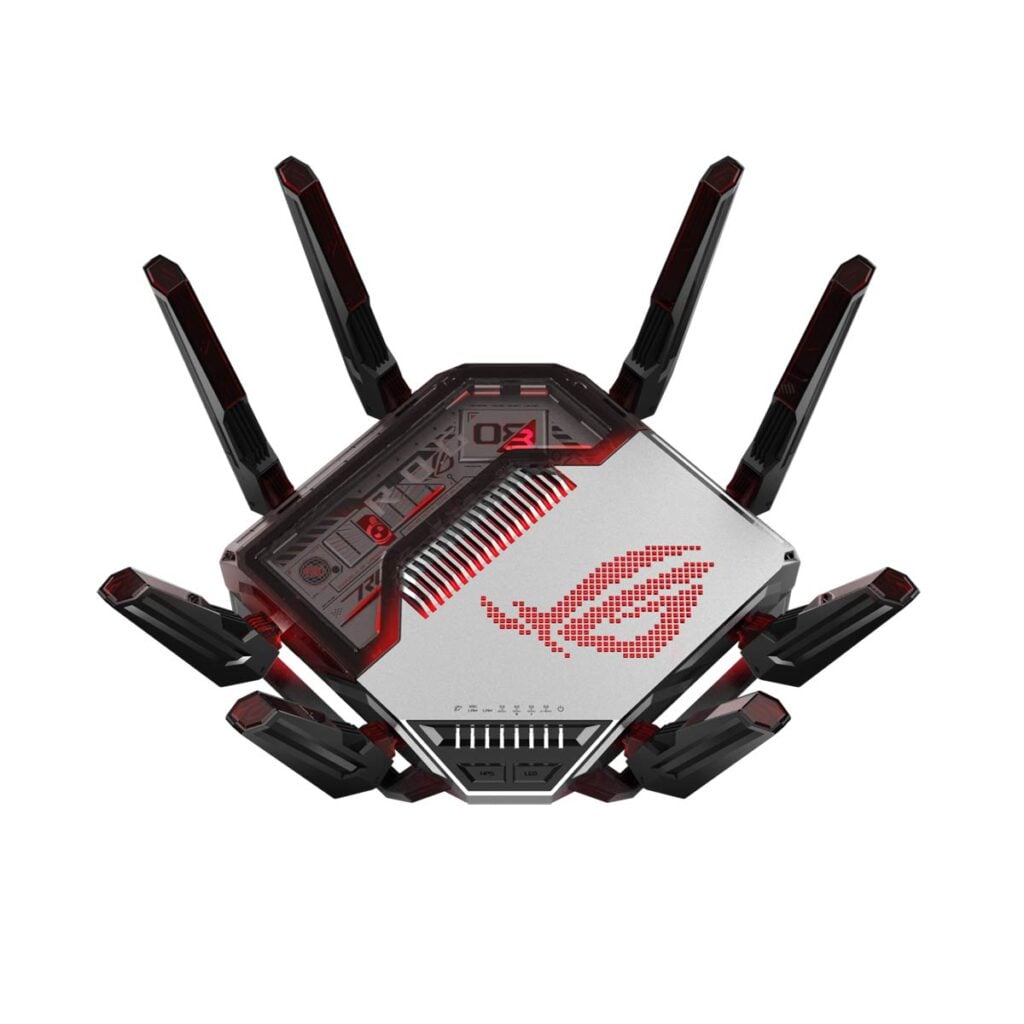
The new hardware includes two quad-band gaming routers, the GT-BN98 Pro and GT-BN98, and the ZenWiFi BN12 mesh system.
Let’s start with the routers.
GT-BN98 and GT-BN98 Pro: Largely the same routers as each other and as previous models
If the names ring a bell, ASUS’s two new Wi-Fi 8 routers are somewhat of a déjà vu: the GT-BN98 is the Wi-Fi 8 version of the GT-BE98 (available only in the EU market), whereas the GT-BN98 Pro is the Wi-Fi 8 version of the GT-BE98 Pro, made primarily for North America.
Mind the little detail: BE is short for Wi-Fi 7 (802.11be), as BN is for Wi-Fi 8 (802.11bn).
As such, this pair retains the “dead spider” design of previous models. They are identical square-ish boxes with eight external antennas sticking up from the sides.
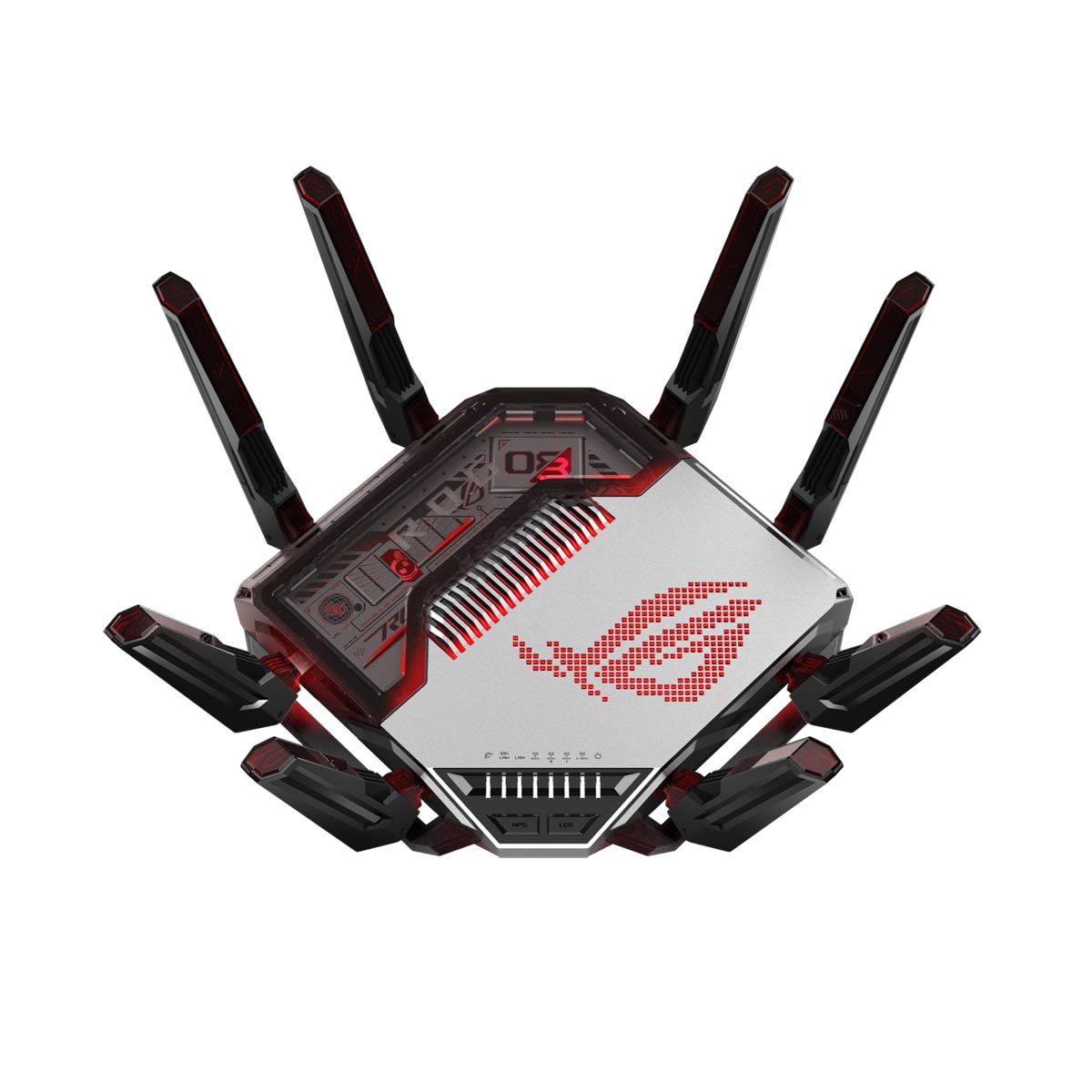
They also share the same overall hardware specs, including the number and grades of network ports as previous models and as each other. Specifically, they both come with two 10 Gbps ports and four 2.5 Gbps ports.
So, appearance-wise, there seems to be nothing to distinguish the GT-BN98 Pro from the non-Pro version, just like the case of their Wi-Fi 7 counterparts.
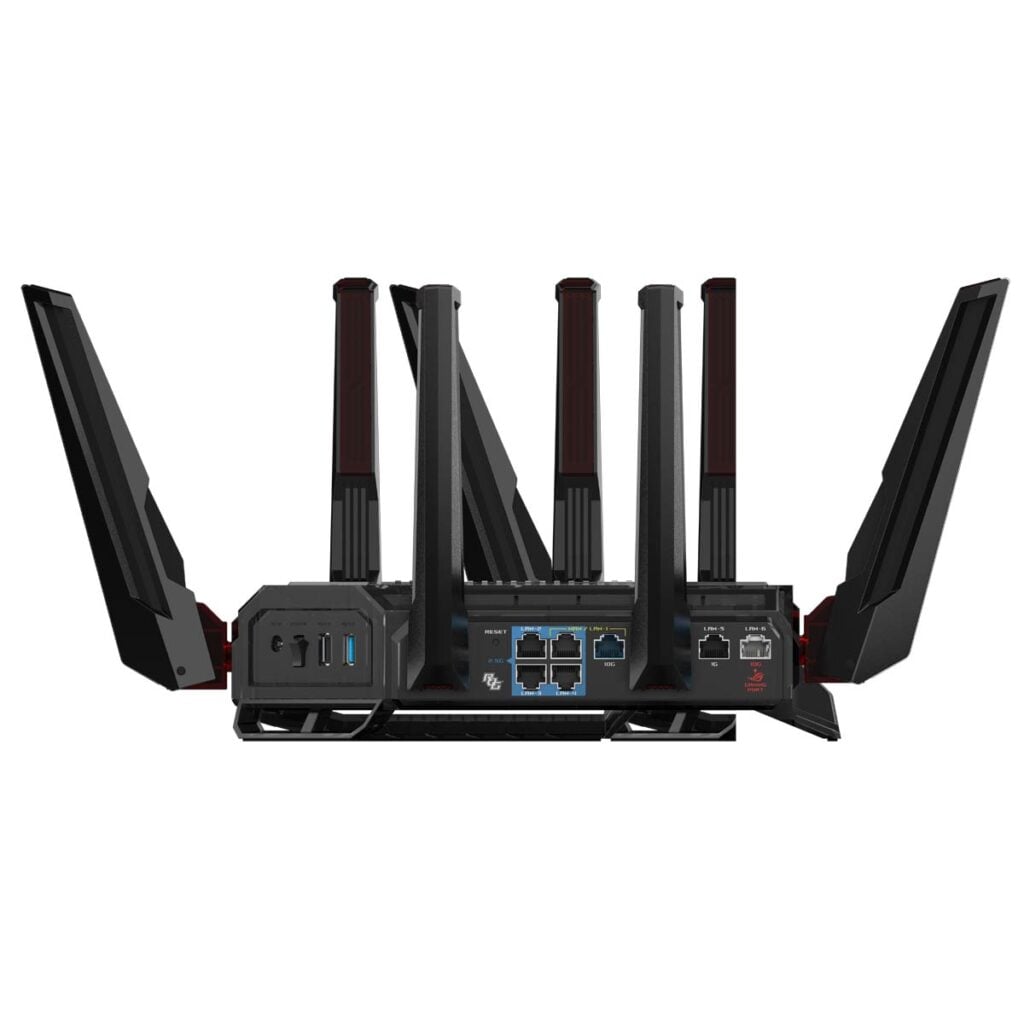
The two new routers differ only in their split-band configuration (to form the quad-band specs): 5 GHz for the GT-BN98 and 6 GHz for the GT-BN98 Pro.
So, to reiterate, the GT-BN98 and GT-BN98 Pro are simply the Wi-Fi 8 versions of the GT-BE98 and GT-BE98 Pro. And as Wi-Fi 8 shares the same channel configurations as Wi-Fi 7, the two new routers also share the same Wi-Fi bandwidth as the Wi-Fi 7 models they replace.
The table below shows the hardware specs of the GT-BN98 and GT-BN98 Pro—essentially two variants of the same hardware. While Wi-Fi 8 is still in draft status, based on my past experience, other details about these two are likely solid.
Hardware specifications: ASUS GT-BN98 Pro vs. GT-BN98
 |  | |
|---|---|---|
| Name | ASUS ROG Rapture GT-BN98 Pro Quad-band Wi-Fi 8 Gaming Router | ASUS ROG Rapture GT-BN98 Quad-band Wi-Fi 8 Gaming Router |
| Model | GT-BN98 Pro | GT-BN98 |
| Wi-Fi 7 Predecessor | GT-BE98 Pro | GT-BE98 |
| Antennas | 8 x external | |
| Wi-Fi Bandwidth | Quad-band BN30000 | Quad-band BN25000 |
| Modulation Scheme (QAM) | 4096-QAM (all bands) | |
| 1st Band (channel width) | 2.4GHz: 4×4 BN with up to 1376Mbps (20/40MHz) | |
| 2nd Band (channel width) | 5GHz: 4×4 BN with up to 5762Mbps (20/40/80/160MHz) | 5GHz-1: 4×4 BN with up to 5762Mbps (20/40/80/160MHz) |
| 3rd Band (channel width) | 6GHz-1: 4×4 BN with up to 11,525Mbps (20/40/80/160/320MHz) | 5GHz-2: 4×4 BN with up to 5762Mbps (20/40/80/160MHz) |
| 4th Band (channel width) | 6GHz-2: 4×4 BN with up to 11,525Mbps (20/40/80/160/320MHz) | 6GHz: 4×4 BN with up to 11,525Mbps (20/40/80/160/320MHz) |
| Multi-Link Operation (MLO) | Yes | |
| Automated Frequency Coordination (AFC) | TBD | |
| Network Standards | IEEE 802.11a, IEEE 802.11b, IEEE 802.11g, IEEE 802.11n, IEEE 802.11ac, IEEE 802.11ax, IEEE 802.11be, IPv4, IPv6 | |
| Network Features | Web User Interface ASUS Mobile App ASUS Core Features ASUS Gaming Features | |
| Mesh-Ready | Yes (AiMesh) | |
| Processing Power | Quad-core 2.6GHz CPU, 256MB Flash, 2GB DDR4 RAM | |
| Multi-Gig Port | 1x 10GBASE-T WAN/LAN, 1x 10GBASE-T LAN, 1x 2.5GBASE-T WAN/LAN, 3x 2.5GBASE-T LAN | |
| Gigabit Port | 1 x Gigabit LAN | |
| Link Aggregation | Yes | |
| Dual-WAN | Yes | |
| USB Port | 1 x USB 3.0, 1 x USB 2.0 | |
| Hardware Buttons | Power Switch, Reset Button, WPS Button, LED Control | |
| Dimensions (with antennas) | 14.12 x 14.12 x 8.77 in (358.6 x 358.6 x 222.8 mm) | |
| Weight | TBD | |
| Release Date (estimate) | Late 2026 | |
| US Launch Price | TBD | |
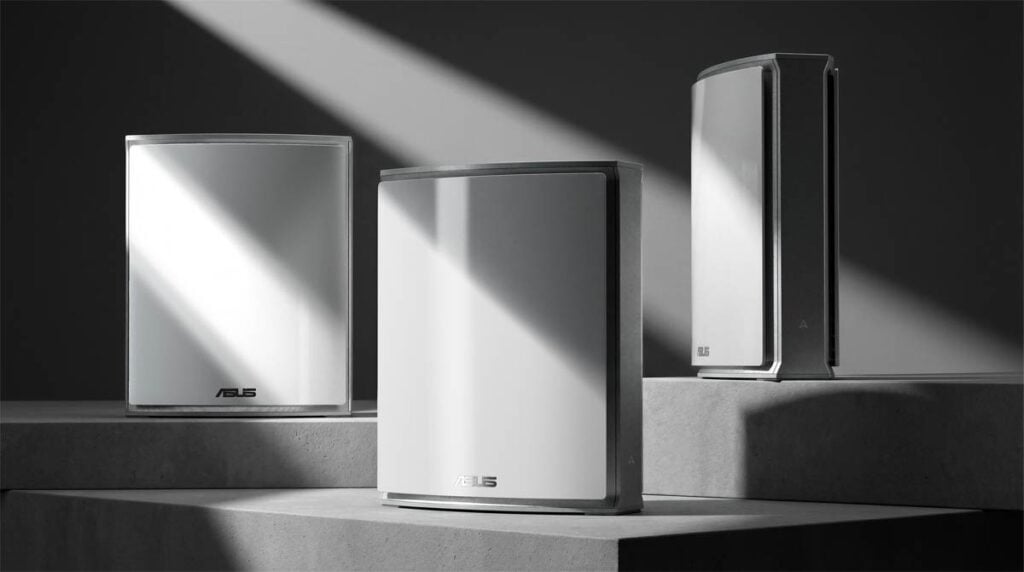
ZenWiFi BN12: The Wi-Fi 8 version of the BT10?
The details of the ZenWiFi BN12 are a bit sketchier—ASUS doesn’t even offer all of its hardware specs yet.
All that’s currently known is that it’s a Wi-Fi 8 mesh system with up to 19000 Mbps of bandwidth (BN19000), consisting of two or three identical mesh routers. That said, it’s somewhat of an upgraded version of the ZenWiFi BT10.
It, too, comes with two 10Gbps ports and three 2.5Gbps ports. ASUS says each ZenWiFi BN12 mesh router can cover up to 3,500 ft2 (325 m2), and a 2-pack can cover about 7,000 ft2 (650 m2) of residential area. As usual, take these estimates with a grain of salt.


ASUS Wi-Fi 8 hardware: Availability and expectations
ASUS told me that the ZenWiFi BN12 will come out sometime in 2027. However, the GT-BN98 or GT-BN98 Pro will likely be available before 2026 is out, if not as soon as by the end of this month.
In the North American market, either or both may appear in Canadian retail stores first. If you wonder why, that’s because the US market has been complicated by the FCC’s ban on all foreign-made routers.
In any case, all of these new hardware options will need regulatory approval before you can take them home. As for pricing, ASUS says that it will be made available close to the hardware release date. There’s no rush, though, as Wi-Fi 8 is still in draft and focuses more on connection quality than ceiling speeds, which remain the same as Wi-Fi 7. As usual, it will take a couple of years for the standard to have supported clients.
I’ll keep an eye on these and, as usual, will take them out for a real-life spin when possible. Check back for more.


Comments are subject to approval, redaction, or removal. You're in the no-nonsense zone and that applies BOTH ways.
It's generally faster to get answers via site/page search. Your question/comment is one of many Dong Knows Tech receives daily.
Thank you!
(•) If you have subscription-related issues or represent a company/product mentioned here, please use the contact page or a PR channel.