
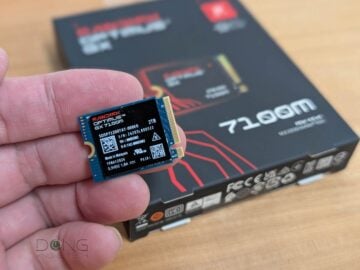
The SANDISK Optimus GX 7100M, unveiled during CES 2026 and recently made available, is the first internal NVMe SSD from Sandisk I’ve had my hands on since the company introduced its new “SANDISK Optimus” branding in January 2026, replacing Western Digital’s legacy WD Black and WD Blue series.
Tip
In March 2025, Western Digital (WD) split off SanDisk as a separate company, which now goes by “Sandisk”. The move means WD retains all hard platter-based products (hard drives), including those with “SanDisk” in their model names. Similarly, Sandisk takes over all NAND-based products—SSDs, memory cards, and so on—including those bearing “WD” in their model names. In January 2026, Sandisk introduced “SANDISK Optimus” as the new brand for its NVMe SSDs, including existing WD Black and WD Blue NVMe drives.
In my testing, the new drive proved to be an excellent experience, slightly better than Micron’s Crucial P310, which is also available in the 2230 profile—both drives are only 30mm long, as opposed to 80mm for the more traditional 2280 design.
Here’s the bottom line: If you’re looking for an NVMe SSD tiny enough to fit inside even the tightest M.2 slot, the SANDISK Optimus GX 7100M is an excellent buy. Or you can consider the 2280 Optimus GX 7100 version if you have a full-size M.2 slot. In either case, be prepared for their current high pricing due to the memory shortage caused by AI.
SANDISK Optimus GX 7100/M's Rating
Pros
Excellent PCIe Gen 4 NVMe performance
Available in compact 2230 and standard 2280 designs
Helpful dashboard software
Cons
No 2280 adapter included
No hardware encryption or user-accessible features.
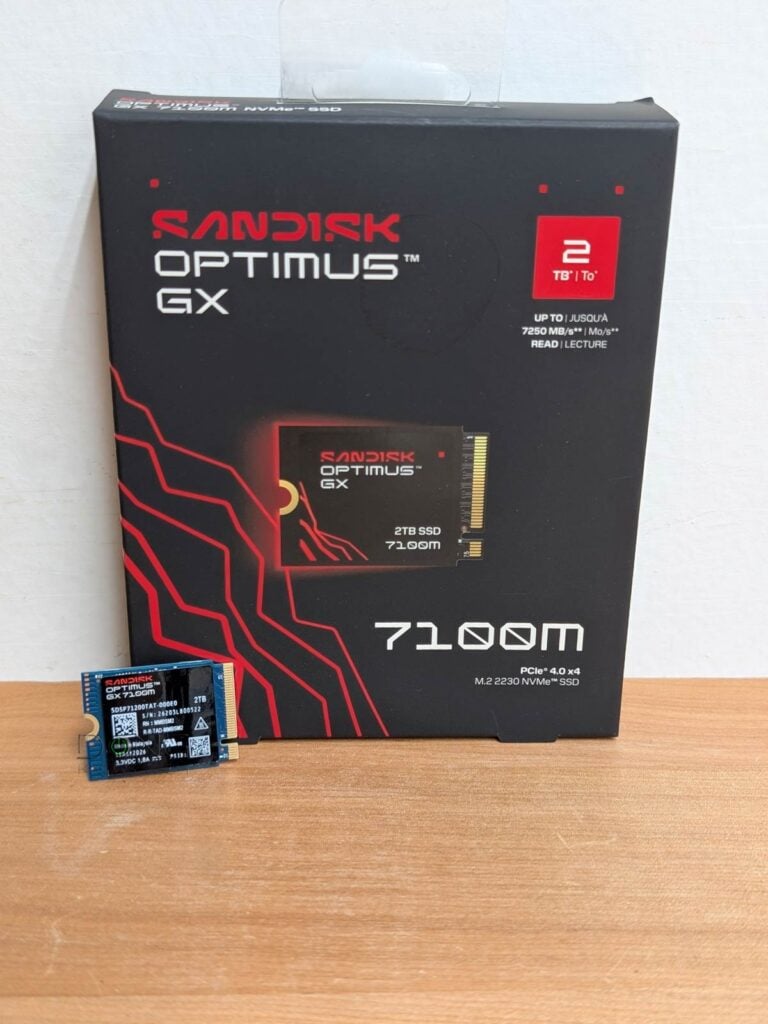
SANDISK Optimus GX 7100M: A well-performing PCIe Gen 4 NVME SSD
A bit of clarification: The Optimus GX 7100M drive is the compact version of the Optimus GX7100, which is a rebranded version of the WD Black SN7100—both use the standard 2280 design, and I have reviewed neither.
That said, the Optimus GX 7100M is the only one in SANDISK’s new Optimus family available in the compact 2230 design. As such, it’s the first original Optimus drive, not simply a name change of any previous WD Blue or WD Black options.
That aside, the Optimus GX 7100M shares the same hardware specs as the Optimus GX7100. The only difference between them is the physical size, with the M version being shorter. In other words, you can expect the same performance and value when you get either of the two.
At almost half the length, the new Optimus GX 7100M is more flexible: it fits in tight spaces and can be converted into a 2280 drive with a length adapter (not included). In return, physically smaller, its capacity maxes out at only 2TB or half that of the 2280 version.
As a 2230 M.2 drive, which is relatively rare, the Optimus GX 7100M is the rival to Micron’s Crucial P310. In this case, it’s an easy win, thanks to better performance, as shown in the performance section below, and, not least, the fact that Micron recently retired the Crucial brand to focus its NAND products on the AI market (which is part of why consumer-grade SSDs are so expensive these days).
The table below compares the hardware specs of the two 2230 NVMe SSDs.
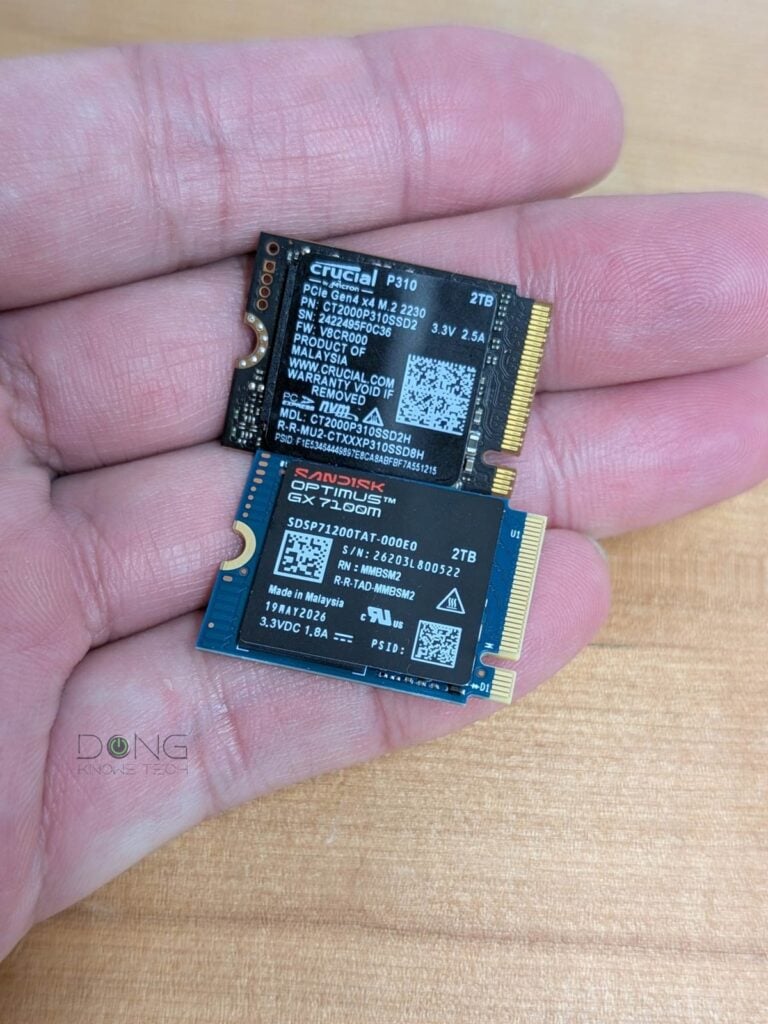
Hardware specifications: SANDISK Optimus GX 7100M vs. Micron Crucial P310
 | 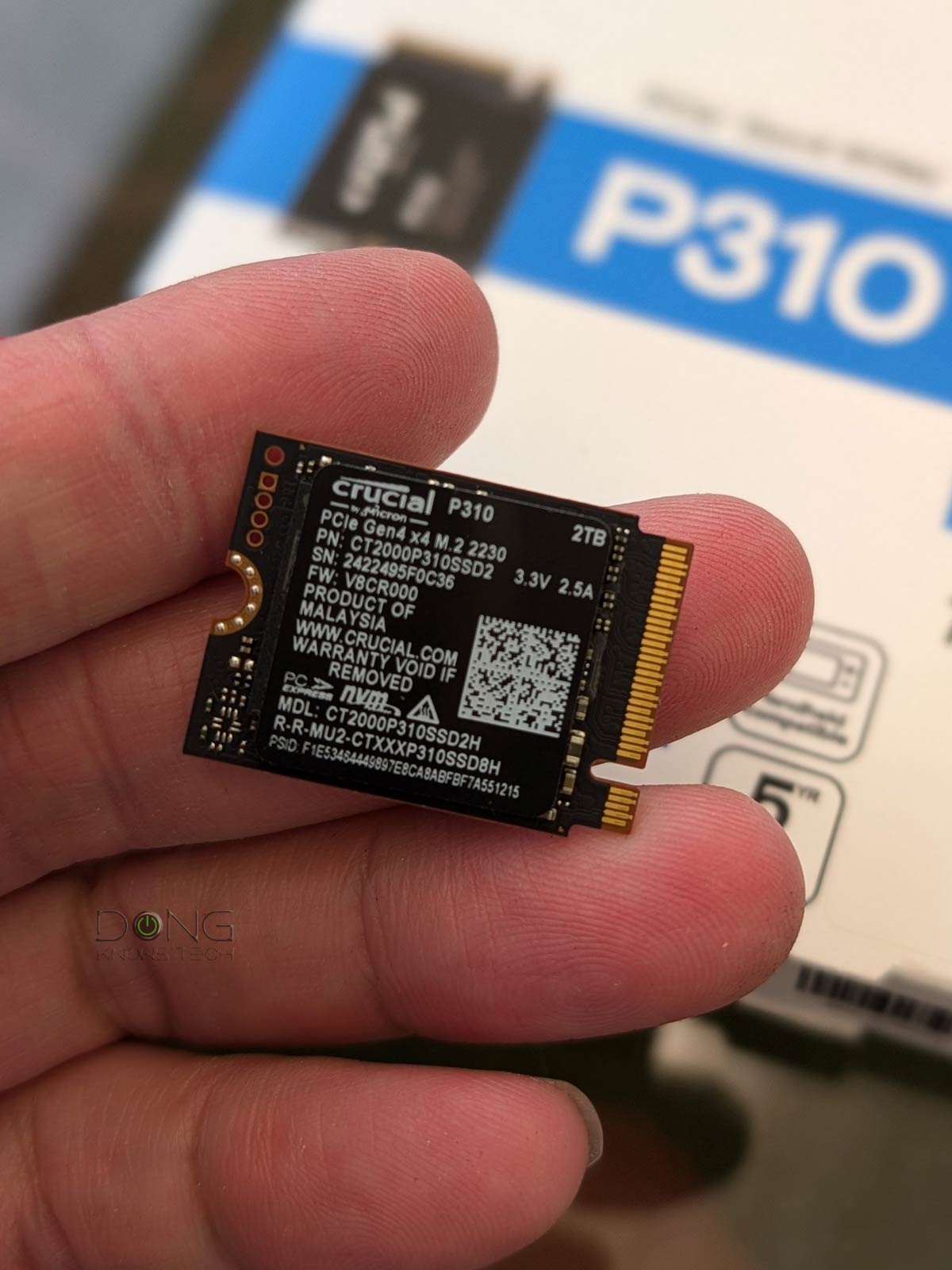 | |
|---|---|---|
| SANDISK Optimus GX 7100M | Micron Crucial P310 | |
| Capacities | 1TB, 2TB | |
| Interface | PCIe 4×4 NVMe 2.0 | |
| Design | M.2 2230 | |
| Controller | Sandisk A101-000172-A1 | Phison E27T 4-channel DRAM-less controller |
| NAND Flash Memory | SANDISK TLC 3D CBA NAND | Micron Advanced 3D NAND |
| Security | None | |
| Sequential Read | 7,250 MB/s | 7100 MB/s |
| Sequential Write | 6,900 MB/s | 6000 MB/s |
| Random Access Read | 1M IOPS | |
| Random Access Write | 1.3M IOPS | 1.2M IOPS |
| DRAM | DRAM-less (host memory buffer) | |
| Endurance (Terabyte Written) | 600TBW (1TB) 1200 TBW (2TB) | 220 TBW (1TB) 440 TBW (2TB) |
| Software | SANDISK Dashboard | Crucial Storage Executive |
| Warranty | 5 years | |
| US Launch Price (check price on Amazon!) | $299 (1TB) $599 (2TB) | $115 (1TB) $215 (2TB) |
Optimus GX 7100M: A standard Sandisk SSD
As shown in the table above, the Optimus GX 7100M is similar to the Crucial P310 with one key difference: it comes with 600TBW of endurance per each terabyte of storage, which is almost three times that of its rival.
Other than that, it, too, is a frill-free, DRAM-less SSD that uses the host’s memory as buffer instead of having its own. It also lacks hardware encryption or any other bells and whistles, such as the Game Mode, available in the Optimus GX PRO drives.
The drive is accompanied by the downloadable and familiar SANDISK Dashboard software, which users can use to monitor its health, update the firmware, and manage settings such as TRIM, Write-Cache, and S.M.A.R.T. tests.


Overall, it’s a standard drive that will operate at its optimal state by default, making it perfect for both non-dynamic hosts, such as a game console, and dynamic ones, such as a computer. Most importantly, it excels where it matters the most: performance.
SANDISK Optimus GX 7100M: Excellent performance
I tested the 2TB version of the Optimus GX 7100M, and it proved to be a formidable contender among PCIe Gen 4 NVMe SSDs, edging out the Crucial P310 rival in most cases.


The drive proved to be one of the fastest PCIe Gen 4 drives I’ve tested, delivering close to 6000 MB/s in both reading and writing. When performing both, it still sustained over 3200MB/s, trailing behind only PCIe Gen 5 drives
The SANDISK Optimus GX 7100M performed well in random-access tests, too, and in real-world use, it “felt” similar to a PCIe Gen 5 drive when serving as the primary drive on my testbed. That’s to say, PCIe Gen 4 is still the sweet spot combo of performance and cost.
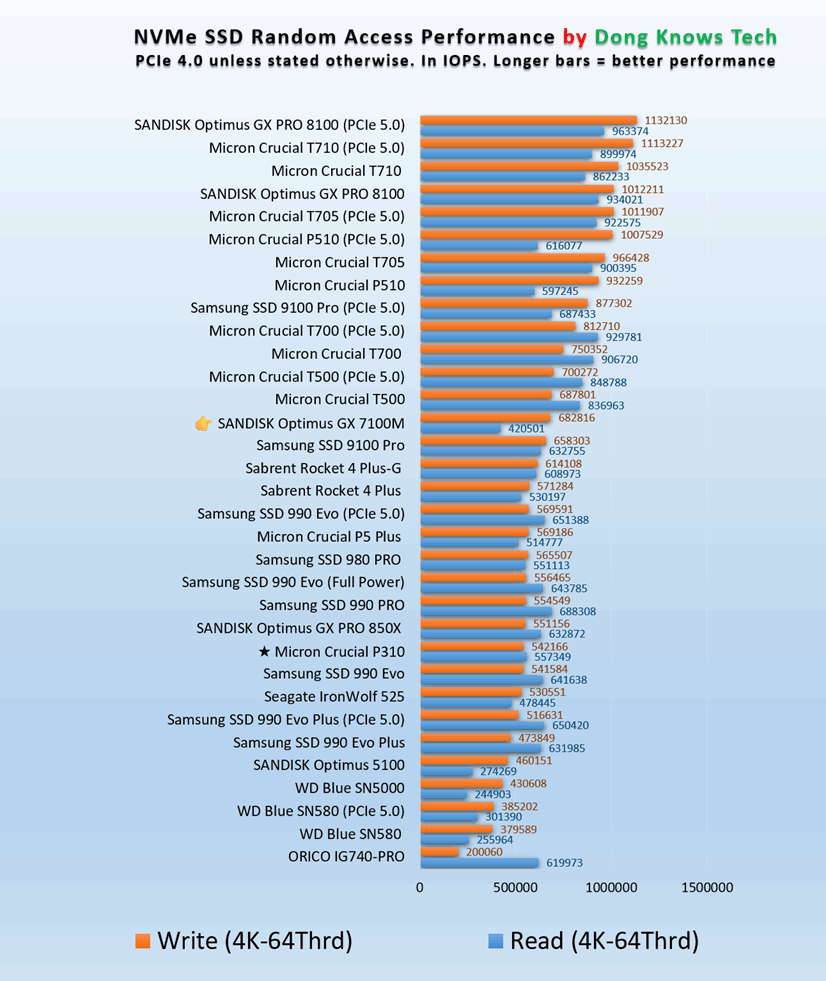
The SANDISK Optimus GX 7100M remained relatively “cool” during operation. It did warm up, but I was able to rest my finger on it indefinitely, which is always a good thing.
Conclusion
In the current market, when SSDs prices are extremely high due to AI, the SANDISK Optimus GX 7100M (as well as the 2280 version) is a safe investment. It’s a free-free drive that delivers top performance on your device, whether a computer or a game console, without producing too much heat or draining the battery quickly. Consider one today!


Comments are subject to approval, redaction, or removal. You're in the no-nonsense zone and that applies BOTH ways.
It's generally faster to get answers via site/page search. Your question/comment is one of many Dong Knows Tech receives daily.
Thank you!
(•) If you have subscription-related issues or represent a company/product mentioned here, please use the contact page or a PR channel.