
By now, you might have learned that TP-Link’s latest Wi-Fi 8 router, the Archer BN800, isn’t available in the US (leaving ASUS’s GT-BN98 Pro as the first router of the latest Wi-Fi standard you can buy in this market) because of the FCC’s foreign-made router ban.
As it turns out, that might be the least of the China-origin networking vendor’s problems. According to the FCC, some of its existing Wi-Fi 7 routers may have failed to stay within their allowed broadcast power limits, which is a serious compliance breach.
Dong’s note: This story has been updated to include TP-Link’s response.
FCC: Broadcast power limit breaches found in TP-Link Wi-Fi 7 routers
In a couple of letters recently made public, dated October 15, 2026, sent to TP-Link, the FCC stated that the Office of Engineering and Technology (OET) has “tentatively determined that TP-Link included false or incorrect information in its applications for these equipment authorizations; and these devices do not operate consistently with the parameters power levels submitted in the certification applications.”
The OET said these findings came from samples it obtained through retail channels (presumably not samples TP-Link submitted with the original applications).
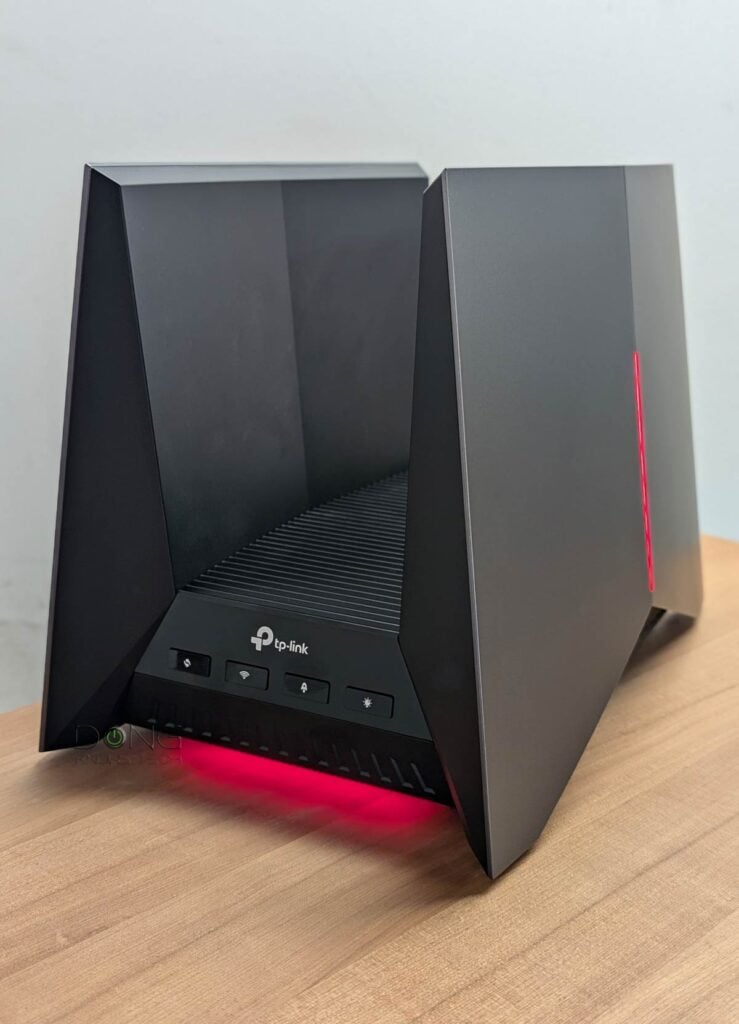
For example, the Archer GE800, which is a flagship gaming router, “exceeded the FCC PSD EIRP limit of 5 dBm/MHz by 3.28 dB. The measured value also exceeded the certification PSD EIRP value of 4.89 dBm/MHz by 3.39 dB – approximately 2.18x the certified power level.”
dBm is the power measurement for wireless broadcast power. In Wi-Fi, the dBm value determines how strong the outgoing signals a Wi-Fi access point can emit—the higher the value, the stronger the signals. Broadcast power is regulated differently worldwide and varies by band (2.4GHz, 5GHz, and 6GHz). Generally, the US limit is the most generous—the highest.
The Archer GE800 wasn’t the only one. The OET said that it found similar breaches in a few other models, too, including:
- Archer BE670: exceeded by 2.2 dB on the 6GHz band.
- Deco BE67: exceeded by 4.11 dB on the 6GHz band.
- BE3600 TL-WR3602BE: 2.61 dB on the 5GHz band.
Higher broadcast power generally means better performance, which has been the case with many TP-Link routers in my experience. And performance is something consumers gravitate to when getting Wi-Fi equipment. Who wouldn’t want a fast Wi-Fi router with extended range?
Getting caught red-handed?
The most damning part of this story is that these breaches occurred in TP-Link’s existing Wi-Fi 7 routers—popular in the US market. This suggests TP-Link either cheated in the application process or changed its hardware after being approved.
It’s unclear how many TP-Link models OET has obtained for this compliance testing, or if these are the only ones they’ve decided to check at random. The answer will offer a clearer picture of the scale of this alleged compliance breach.
In any case, these new findings put TP-Link back in hot water, unrelated to the FCC’s earlier national security claims or its subsequent decision to ban all foreign-made routers. At the very least, it means TP-Link’s Wi-Fi 8 routers face more scrutiny before they can enter the US market.
It’s worth noting that the wording of the letters is not definitive. We have to wait to hear from TP-Link to find out what really happened.
TP-Link’s response
In response to my requests for comments, TP-Link Systems Inc.’s spokesperson offered this statement:
“U.S.-based TP-Link Systems Inc. is committed to regulatory compliance and maintains the highest standards across all of its products. Routine spot checks have been a standard FCC practice across the consumer electronics industry for many years.
TP-Link Systems fully supports the FCC’s Office of Engineering and Technology and its role in ensuring that all manufacturers adhere to prescribed specifications for their certified products. We remain fully committed to working collaboratively with the FCC to resolve any technical questions that arise — and if necessary, addressing any confirmed technical issues as swiftly as possible.”
It’s unclear how the company plans to resolve the issues (if confirmed). It may make the hardware comply with the broadcast power limit by lowering its threshold (and performance) via firmware updates, or it may offer a hardware exchange.
In any case, if found noncompliant, TP-Link will likely face stiff fines and even an FCC ban on all its equipment.
An ongoing matter
Keep in mind that using wireless equipment that operates outside regulated parameters, while not necessarily harmful to health, can seriously disrupt other equipment operating in the same frequency. It’s a public safety issue among other things.
In the letters, the OET asked TP-Link to provide “a detailed response with supporting documentation by October 30, 2026” for each device in question. This is clearly an ongoing story, and we’ll see how it ends relatively soon.



Comments are subject to approval, redaction, or removal. You're in the no-nonsense zone and that applies BOTH ways.
It's generally faster to get answers via site/page search. Your question/comment is one of many Dong Knows Tech receives daily.
Thank you!
(•) If you have subscription-related issues or represent a company/product mentioned here, please use the contact page or a PR channel.