
Today, TP-Link announced pre-orders for its first Wi-Fi 8 router, the Archer 8 Ultra (a.k.a. Archer BN800). Shipping will begin sometime in October.
There’s a twist: for now, the new router is available only in the UK, Germany, and Australia. In other words, it’s unclear when, or even if, it (and other TP-Link Wi-Fi 8 hardware) will be available in the US.
This is newsworthy because back in 2024, TP-Link was the most popular networking company in this market. That’s not to mention new routers from major networking vendors often arrive in the US at the same time as the rest of the world, if not before.
Let’s find out how we got here.
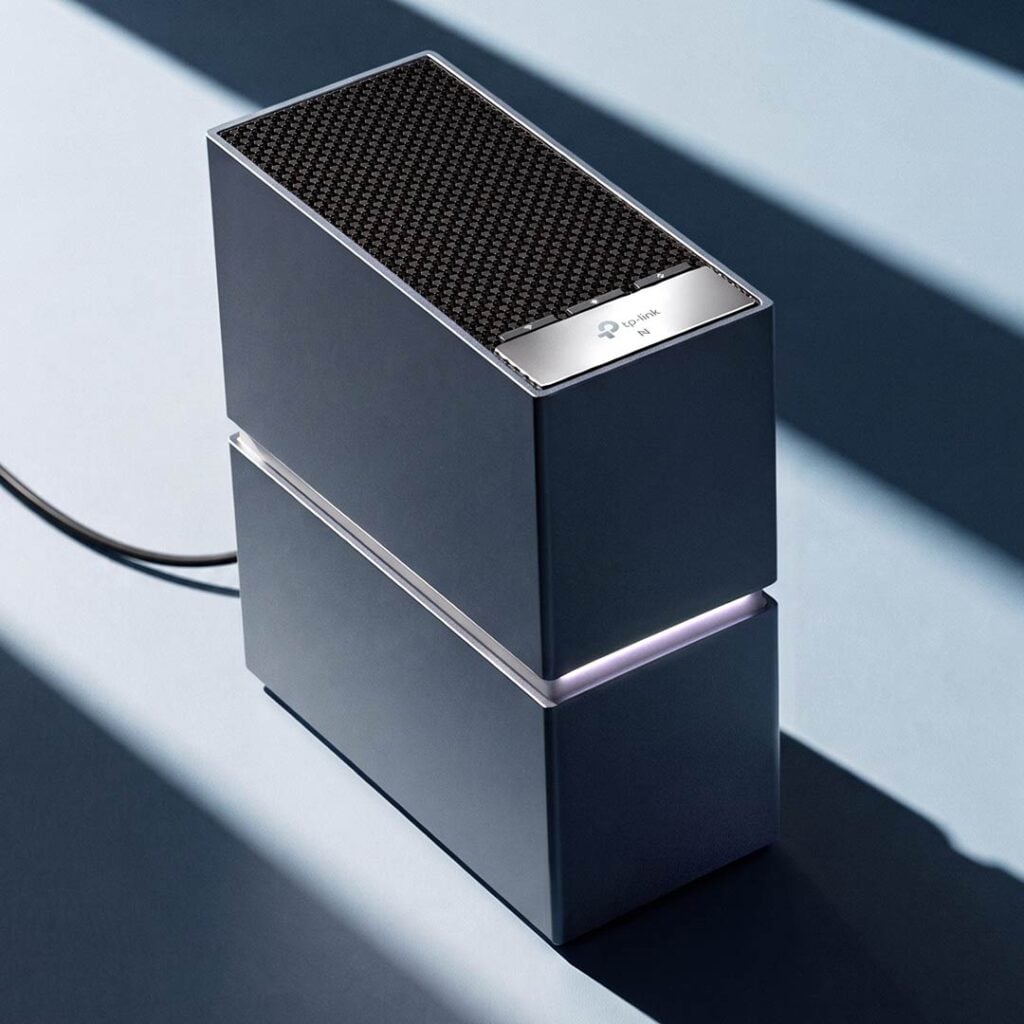
TP-Link and Wi-Fi 8 in the US market: A complicated story
It’s an understatement to say TP-Link’s US journey to Wi-Fi 8 has been quite a trip. Before today’s announcement, the Chinese-origin networking company teased the Archer 8 Ultra multiple times in 2026 alone.
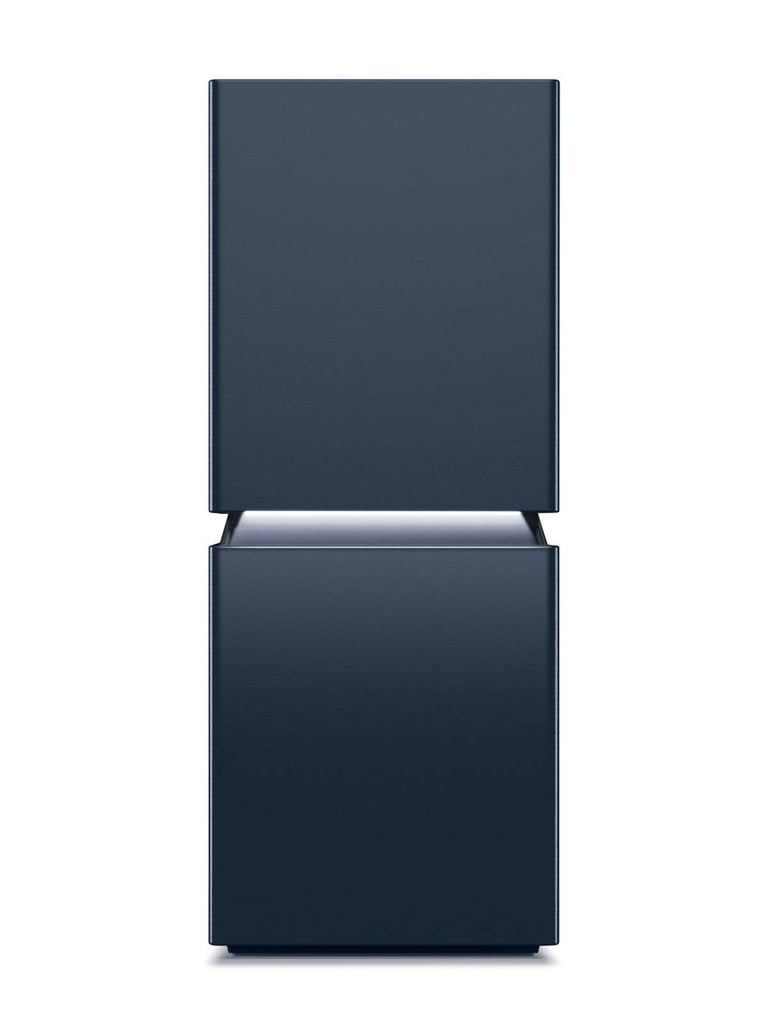
The company first unveiled its Wi-Fi 8 portfolio on May 28, 2026, including a standalone router, a Deco mesh system, and a travel router. The announcement offered little detail: a few close-up rendered images and their intended names—Archer 8, Deco 8, and Roam 8.
Then, on August 31, 2026, it “unveiled” the first two for the second time, each with a fully rendered lifestyle photo, the “Ultra” designation added to the names to signify their top-tier hardware specs, plus the possibility of availability in mid-October. Additionally, TP-Link stated that the hardware was “designed in California.”
And today, without offering much additional hardware detail, such as real-life photos and processing power. TP-Link announced that the Archer 8 Ultra is now available for pre-order—just not in the US.
This omission of the US market may upset some, though it’s not exactly a surprise.
How did we get here?
For years, TP-Link has been quick to jump into new Wi-Fi standards, releasing the first and plenty of hardware options to fit every nook and cranny of the market, often at deep discounts.
The Archer BE800 and Deco BE85, for example, were the very first standalone router and mesh system for the Wi-Fi 7 standard. And, as mentioned, by 2024, TP-Link was reportedly the most popular networking company in the US, with around 65% market share.
Late 2024 was also when the public found out that the US government had, for a few years, considered banning TP-Link routers on national security grounds, accusing the company, among other things, of sharing “backdoors” in its hardware with the Chinese government, and deliberately flooding the US market by selling hardware below manufacturing cost.
In response, TP-Link did a few things.
First, it focused on proving it wasn’t even a Chinese company. Specifically, it created a separate company, TP-Link Systems Inc., headquartered in California. Then, the new company’s CEO, one of the original Shenzhen-based TP-Link founders, applied for US citizenship.
Over the past few years, TP-Link has also asked the press, including yours truly, not to refer to it as a “Chinese” company and pointed out that its hardware was not “Made in China” to begin with. (As it turns out, it’s quite hard to know for sure where TP-Link routers are actually made.)
Meanwhile, TP-Link sued NETGEAR, its primary competitor in the US, for defamation (and was countersued for false advertising).
What was interesting, however, is that TP-Link didn’t do the one thing it should have done: prove it poses no risk to the US’s national security.
The saga ended with the FCC’s late March 2026 decision to ban all new foreign-made routers, with conditional approval offered on a case-by-case basis. As a result, the US government now has full discretion over which routers it’d allow in the US, regardless of manufacturer, and TP-Link, whether Chinese or not, has no say in that.
So far, this umbrella ban seems to be the hurdle TP-Link has yet to overcome, and that’s the stage for TP-Link routers in the US market.
TP-Link and Wi-Fi 8: No one company is the be-all and end-all in home networking
In response to my inquiries regarding getting conditional approval for its Wi-Fi 8 hardware, TP-Link Systems Inc. offered this statement:
“TP-Link Systems Inc. is a global brand that complies with standards and regulations everywhere we do business. As a U.S.-based company, we’re particularly excited to bring our next-gen Wi-Fi 8 portfolio to American consumers, delivering the reliability and network stability they can rely on. We’re working with regulators to bring these products to users worldwide, so keep an eye on our website for more updates.”
So, for now, if you live in the US and want that Archer 8 Ultra, you’ll have to wait. It may be available soon, or it may never be. Most importantly, keep in mind that TP-Link isn’t the only networking vendor. It has never been.
In the US, ASUS and NETGEAR have been formidable alternatives. Over the past few years, Ubiquiti’s UniFi has steadily emerged as one of the best home networking brands, though it wasn’t among the first to jump on the Wi-Fi 8 bandwagon.
ASUS’s first Wi-Fi 8 router, the GT-BN98 Pro, has been approved by the FCC and will be available for purchase in North America in a couple of weeks at the latest, likely sooner.
The point is that, while US consumers may miss out on new TP-Link routers, they sure won’t miss out on Wi-Fi 8.
TP-Link Archer 8 Ultra: Sketchy details
For those in the UK, Germany, or Australia, I don’t have many details to share about the upcoming Archer 8 Ultra. Unlike the ASUS GT-BE98 Pro, I don’t have the actual hardware on hand.
As mentioned, even in this third announcement, TP-Link didn’t include any meaningful new hardware details or real-life photos.
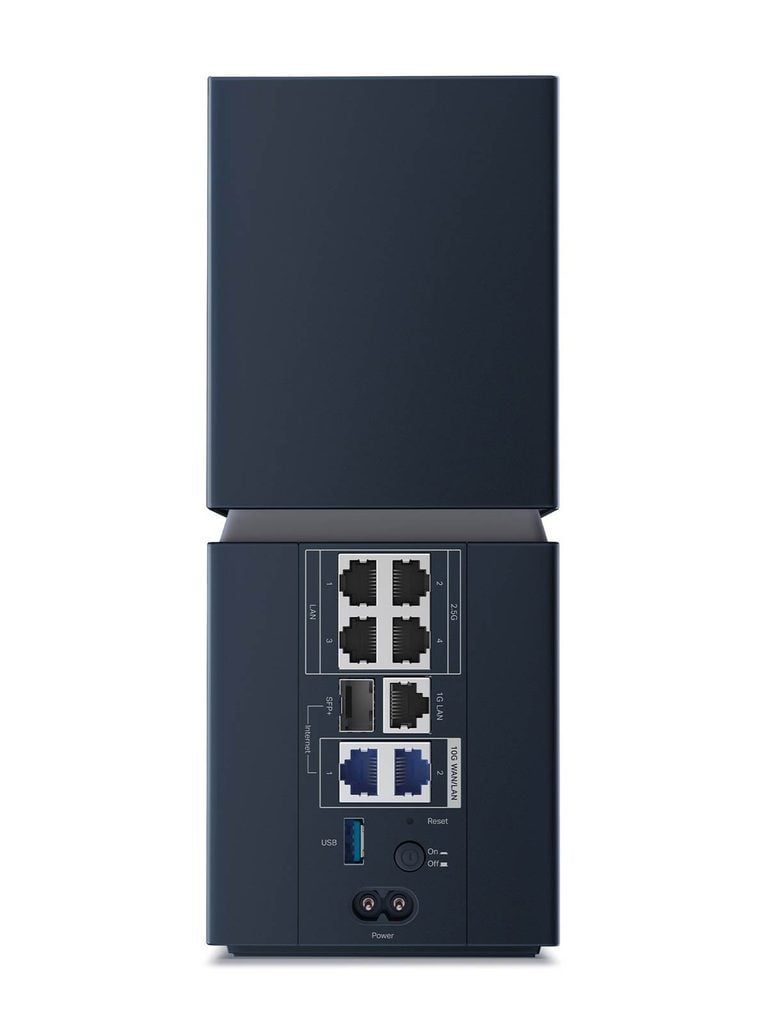
One thing is clear: it has two 10 Gbps auto-sensing WAN/LAN ports and four 2.5 Gbps LAN ports. Beyond that, it comes in a large, boxy desktop design with top-tier processing power.
For other details, TP-Link mostly lists the benefits of Wi-Fi 8, a refined version of Wi-Fi 7, along with some marketing fluff. Specifically, the company touts the following:
- TP-Link’s Wi-Fi 8 StabilityEngine: The new router comes with a suite of next-generation technologies built into its core to strengthen coverage, ease congestion, and cut interference, of which:
- Available at launch: UEQM, new MCS, and 2×LDPC hold throughput steady in a noisy home, delivering up to 33% more consistent throughput at mid-to-long ranges and up to 24% more consistent throughput than Wi-Fi 7 under interference. NPCA keeps the network responsive as more devices come online.
- Rolling out in the future via firmware updates as Wi-Fi 8 matures: DSO will expand many-device capacity, ELR and DRU will strengthen coverage at the edges of the home, and Co-TDMA, Co-SR, and Co-BF will coordinate homes with more than one access point.
- Peak Hardware, Refined Design: The Archer 8 Ultra features Broadcom’s Wi-Fi 8 chipset with nineteen gigabits of tri-band Wi-Fi 8 to deliver steadier performance and lower latency. Its eighteen internal high-performance antennas cover up to 3,600 ft2 and support up to 200 devices.
- Built Smarter, Made Easier: With the new router, TP-Link introduces Aireal AI Assistant in the Tether mobile app, letting users customize and manage the network in plain language while keeping the connection steady behind the scenes. The app also simplifies setup, and Guest users can access the network by tapping their phone on the router using NFC.
- Secure From the Ground Up: The Archer 8 Ultra includes an integrated hardware-level VPN that encrypts selected devices’ traffic directly on the router and works with third-party VPN providers, while isolated guest and IoT networks keep vulnerable devices off the main network. Users can also opt into TP-Link’s premium HomeShield service for real-time protection, advanced parental controls, and WPA3 authentication.
It’s worth noting that everything mentioned above, especially anything following “up to,” should be taken with a grain of salt—the effect may be present to varying degrees, if at all. Still, it’s safe to say the new Wi-Fi 8 router will have a lot of exciting potential.
Based on my real-world experience with ASUS’s GT-BE98 Pro, which proved very similar to its Wi-Fi 7 GT-BE98 Pro, I can confidently say the Archer 8 Ultra will be a similar, albeit better, version of TP-Link’s previous Wi-Fi 7 Archer BE800. Even its alternative model name, Archer BN800, is telling enough.
As for the cost, TP-Link says it’ll be made available on each region’s local TP-Link website and stresses that its “planned products, availability windows, pricing, and specifications are subject to change and vary by region.” In any case, the new router is likely more expensive than the previous Wi-Fi 7 model.
The takeaway
If you’re living in one of those countries where the Archer 8 Ultra is immediately available, congratulations on that added bonus of not currently living in the USA.
Keep in mind, though, that Wi-Fi 8 is still in draft and will take years to show its true effect. We need clients that support it to see how it pans out in real-world usage. That’s not to mention new hardware tends to have issues. As mentioned above, the Aarcher 8 Ultra doesn’t come with everything at launch; many features will be added via firmware updates.
That said, there’s no rush. In fact, for the US market, it may be a good thing it’s not available yet. By the time TP-Link Wi-Fi 8 hardware gets the green light—if it ever does—chances are the bugs and kinks will already be worked out, saving networking enthusiasts from beta testing. It’s a win-win.
In the meantime, if you need a new router today, it’s fine to go with Wi-Fi 7 or even Wi-Fi 6.
Top 5 best full-band Wi-Fi 7 routers
 |  |  |  |  | |
| Name | Ubiquiti UniFi Dream Router 7 (UDR7)'s Rating | ASUS ROG Rapture GT-BE19000AI's Rating | Ubiquiti UniFi Express 7 (UX7)'s Rating | TP-Link Archer GE650's Rating | NETGEAR Nighthawk RS700S' Rating |
| Price | – | – | – | – | – |
| Rating | |||||
| Description | |||||
| Statistics | |||||
| Buy this product |



I love how you put a lot of depth and heart in your coverage. This whole thing with TP-Link is interesting indeed. Thank you, Dong!
👍